
Professional Guide to Selecting High Quality concrete polishing wheels
Mastering the Shine: A Complete Guide to Concrete Polishing Wheels
Achieving a mirror-like finish on a concrete floor requires more than just a powerful machine; it requires the right abrasives. High-quality concrete polishing wheels are the secret weapon for professionals looking to transform raw industrial slabs into elegant, high-gloss surfaces. Whether you are working on a commercial warehouse or a residential living room, understanding the nuances of grit sequences and bond types is essential for efficiency. In this guide, we will explore how to select the perfect wheels to ensure a scratch-free, durable, and stunning result every time.
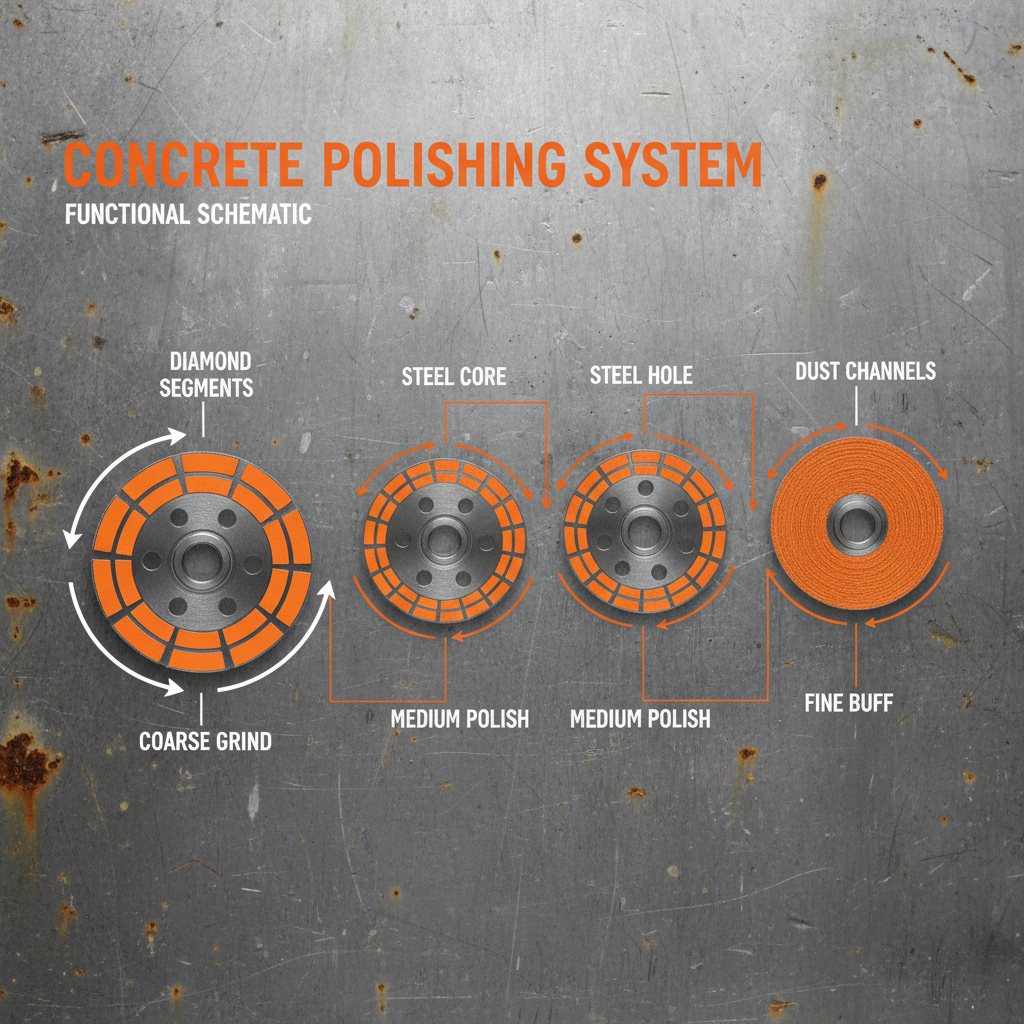
How Concrete Polishing Wheels Work
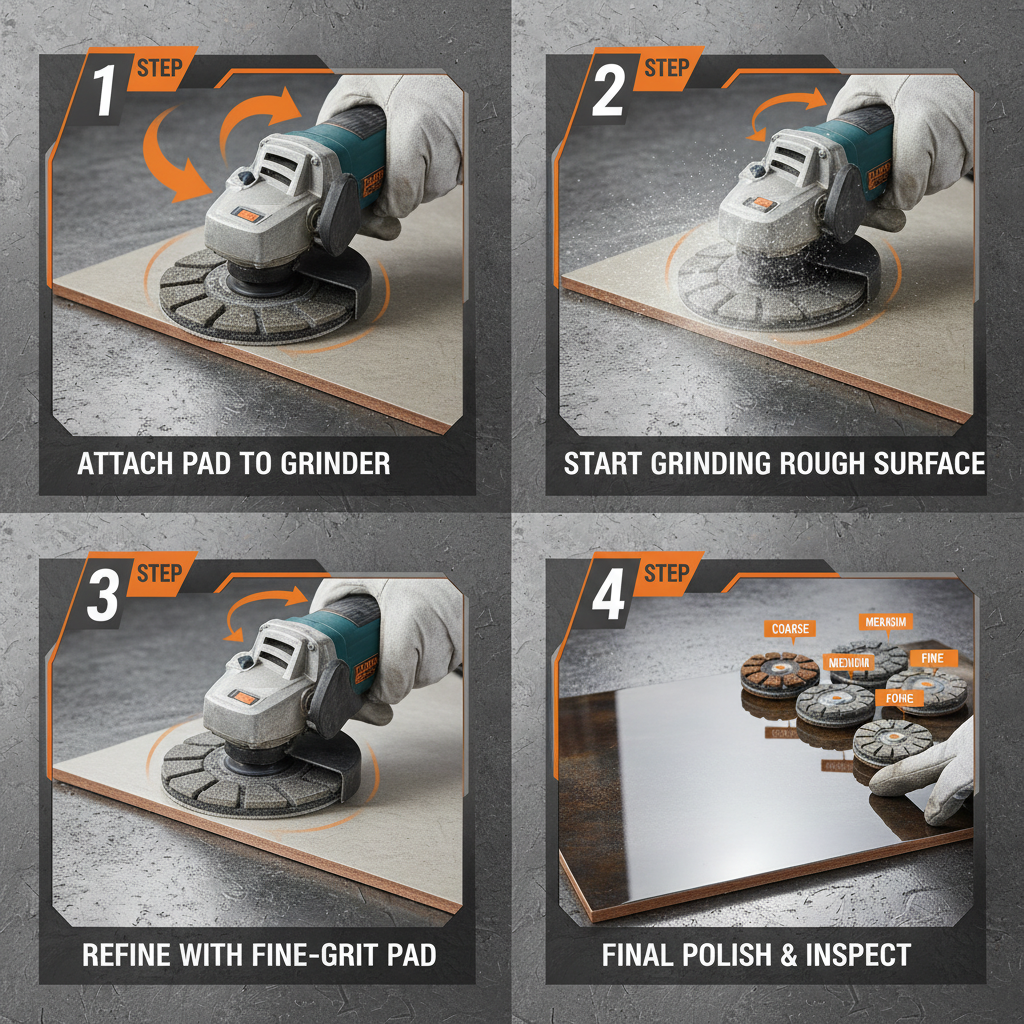
Concrete polishing is a progressive process of abrasion. concrete polishing wheels utilize industrial diamonds embedded in a resin or metal matrix. As the wheel spins, these diamonds shear away the surface imperfections of the concrete. The process begins with coarse grits to remove the "cream" layer and imperfections, gradually moving to finer grits that smooth the surface and create a reflective shine. The quality of the bond determines how quickly the diamonds are exposed, affecting both the speed of the grind and the longevity of the tool.
Pro Tip: Always ensure you do not skip more than one grit level in the sequence. Skipping too many grits can leave visible "pig-tails" or scratches that are nearly impossible to remove in the final polishing stages.
Choosing the Right Grit for Concrete Polishing Wheels
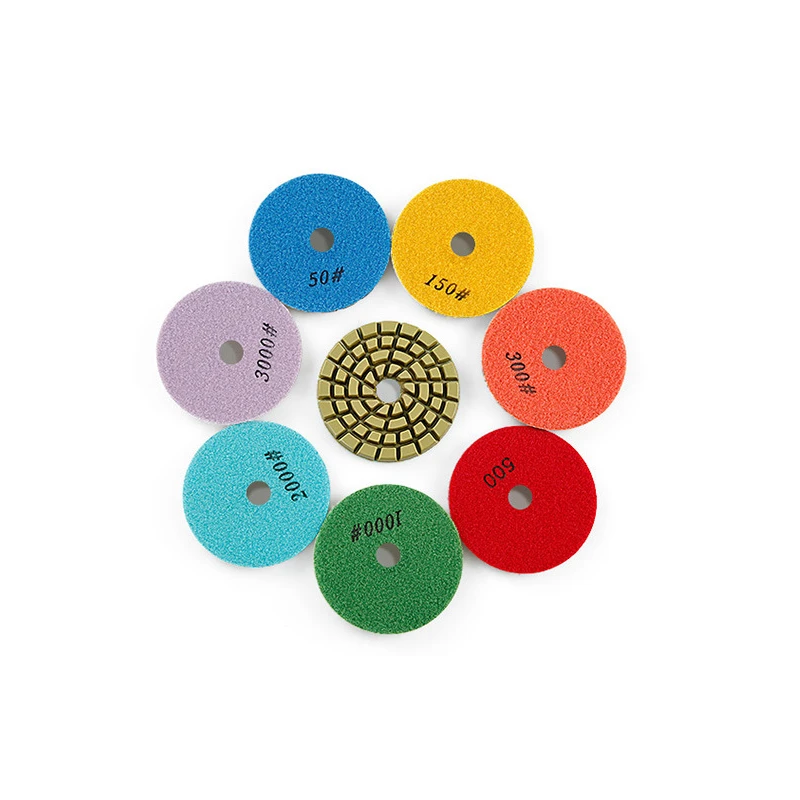
The "grit" refers to the size of the diamond particles. Selecting the wrong grit for a specific stage can either slow down your progress or ruin the finish. Generally, the process is divided into the grinding phase (metal bond) and the polishing phase (resin bond). For a high-gloss finish, you will need a comprehensive set of concrete polishing wheels ranging from 50 grit up to 3000 grit. The transition from matte to glossy typically happens after the 400-grit mark.
Resin Bond vs. Metal Bond Concrete Polishing Wheels
One of the most critical decisions is choosing between resin and metal bonds. Metal bond concrete polishing wheels are incredibly aggressive and durable, making them ideal for removing heavy coatings or leveling uneven floors. On the other hand, resin bonds are softer and contain finer diamonds, which are designed to polish the surface without leaving deep gouges. Using a resin bond too early can lead to "glazing," where the wheel becomes smooth and stops cutting, wasting time and material.
Maintenance Tips for Long-Lasting Polishing Wheels
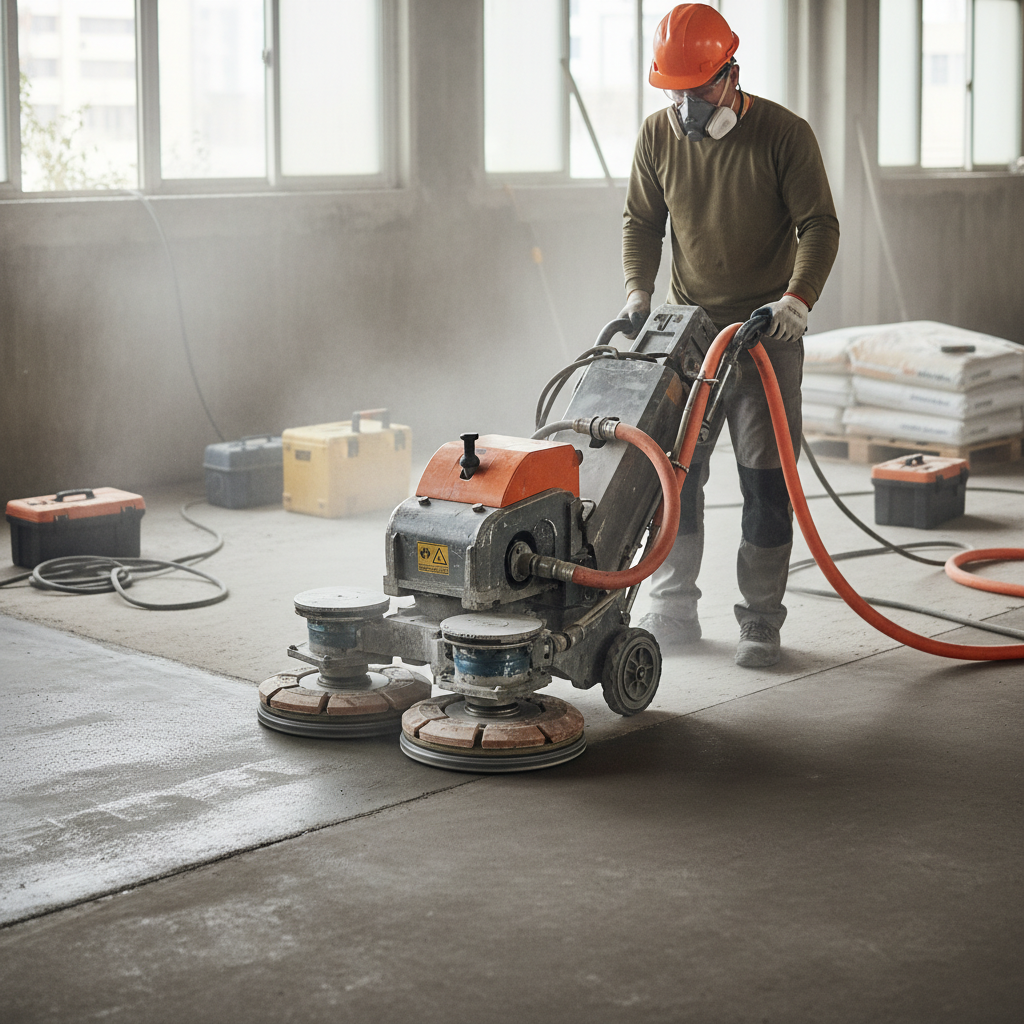
To maximize the ROI of your equipment, proper maintenance is key. When using concrete polishing wheels, avoid applying excessive downward pressure; let the diamonds do the work. For wet polishing, ensure a consistent flow of water to cool the bond and flush away slurry, which prevents the wheels from overheating and premature wear. Regularly checking for "loading" (when concrete dust clogs the diamond pores) and cleaning the wheels can significantly extend their usable life.
Technical Specifications of Professional Wheels
When sourcing tools from a professional supplier like MyDiamondBlade, it is important to verify the technical specifications. The diameter of the wheel, the connection type (e.g., Velcro or bolt-on), and the diamond concentration all play a role in performance. High-concentration wheels typically last longer on hard concrete but may be slower on softer materials. Below is a standard specification table for professional-grade wheels.
Common Mistakes to Avoid When Polishing
Many beginners make the mistake of rushing the process. Over-polishing with a single grit doesn't necessarily make the floor shinier; instead, it just wears down your concrete polishing wheels faster. Another common error is failing to vacuum slurry effectively during dry polishing, which can lead to "balling" and surface streaks. Finally, ignoring the condition of the machine's planetary head can cause uneven polishing, regardless of the quality of the diamonds used.
Conclusion: Elevate Your Floors with Quality Tools
The difference between a mediocre floor and a masterpiece lies in the tools you use. Investing in premium concrete polishing wheels ensures a more consistent finish, reduces labor time, and provides a durable surface that lasts for decades. By following the correct grit sequence and choosing the appropriate bond for each stage, you can deliver professional results that exceed client expectations. Visit MyDiamondBlade today to find the perfect match for your next project.
Frequently Asked Questions (FAQs)
How often should I replace my concrete polishing wheels?
Replacement frequency depends on the hardness of the concrete and the volume of the area being polished. Generally, a wheel is replaced when the diamond layer has worn down and the matrix no longer effectively exposes new diamonds, or when the polishing speed drops significantly. For high-traffic commercial jobs, you may go through several sets, while smaller residential projects might only require one. Always monitor the "cut" of the wheel to ensure you aren't just rubbing the surface without removing material.
Can I use wet polishing wheels for dry polishing?
While some wheels are marketed as "dual-use," it is generally not recommended to use a dedicated wet wheel for dry polishing. Wet wheels rely on water for cooling and lubrication; without it, the friction generates extreme heat that can melt the resin bond or cause the metal bond to overheat, leading to rapid tool failure and potential damage to the concrete surface. If you are performing dry polishing, ensure you use wheels specifically designed for dry application and a high-efficiency industrial vacuum system.
Why is my floor not getting a high gloss despite using fine grits?
The most common reason for a lack of gloss is skipping too many grits in the sequence. If you move from 100 grit straight to 800 grit, the 800-grit wheel cannot remove the deep scratches left by the 100-grit wheel. Another possibility is "glazing," where the polishing wheel has become smoothed over and is no longer cutting. In such cases, you may need to go back one grit level to "open" the surface again. Additionally, ensure you are using a high-quality densifier before the final polishing stages to harden the concrete and improve reflectivity.
What is the difference between a polishing pad and a polishing wheel?
While the terms are often used interchangeably, "wheels" usually refer to more robust, thicker tools often used in the grinding and initial honing stages, often with a rigid core. "Pads" are typically thinner, more flexible resin-based discs used for the final polishing and buffing stages. Both utilize industrial diamonds, but the wheel is designed for material removal and leveling, whereas the pad is designed for refining the surface texture to achieve a specific light-reflective quality. You can find both types of high-performance tools on the MyDiamondBlade website.
Related Products
Related Products





Address
No.30 Gaoying Road ,Chang'an District,Shijiazhuang,Hebei Province
Business Hours
Mon to Saturday : 8.00 am - 7.00 pm
Sunday & Holidays : Closed
.png )