Diamond blade grinder discs represent a cornerstone of modern material processing, impacting industries from construction and landscaping to automotive and aerospace. These specialized tools, engineered with industrial-grade diamonds bonded to a metallic or resinous core, deliver unparalleled cutting, grinding, and polishing capabilities. Their versatility and efficiency have fundamentally changed how professionals approach hard materials like concrete, stone, asphalt, and even ceramics. Understanding the intricacies of these discs - their composition, applications, and future innovations - is crucial for anyone involved in material science, construction, or related fields.
The global demand for diamond blade grinder discs is intrinsically linked to infrastructural development and economic growth. According to the United Nations, urbanization is accelerating worldwide, driving a consistent need for building materials and renovation projects. Simultaneously, the World Bank reports increasing investments in infrastructure across developing nations, further fueling demand. ISO standards dictate stringent quality controls for these blades, ensuring safety and performance. However, challenges remain in sustainable manufacturing, efficient diamond utilization, and adapting to increasingly demanding material science requirements.
A diamond blade grinder disc is fundamentally a rotating tool embedded with industrial diamonds. These diamonds, renowned for their extreme hardness, act as abrasive cutting elements. The ‘blade’ aspect refers to the circular shape and the ‘grinder disc’ aspect indicates its primary function: to remove material through a grinding action. The diamonds are typically bonded to a metal core (often steel) or a resinous matrix. The choice of bonding material and diamond grit size influences the disc's suitability for different materials and applications. The result is a tool capable of efficiently and precisely working with materials that would be impossible to process with conventional abrasives.
Introduction to Diamond Blade Grinder Discs
Diamond blade grinder discs are not simply cutting tools; they are precision instruments tailored for efficient material removal. The unique combination of diamond abrasives and a robust bonding matrix allows for cutting through exceptionally hard materials with minimal effort and optimal precision. Selecting the appropriate diamond blade grinder disc is critical for achieving desired results and maximizing tool lifespan.
The versatility of these discs means they are integral to a vast range of industries, influencing everything from large-scale construction projects to intricate artistic endeavors. Their ability to create clean, precise cuts without excessive heat or dust makes them indispensable for both professionals and dedicated DIY enthusiasts.
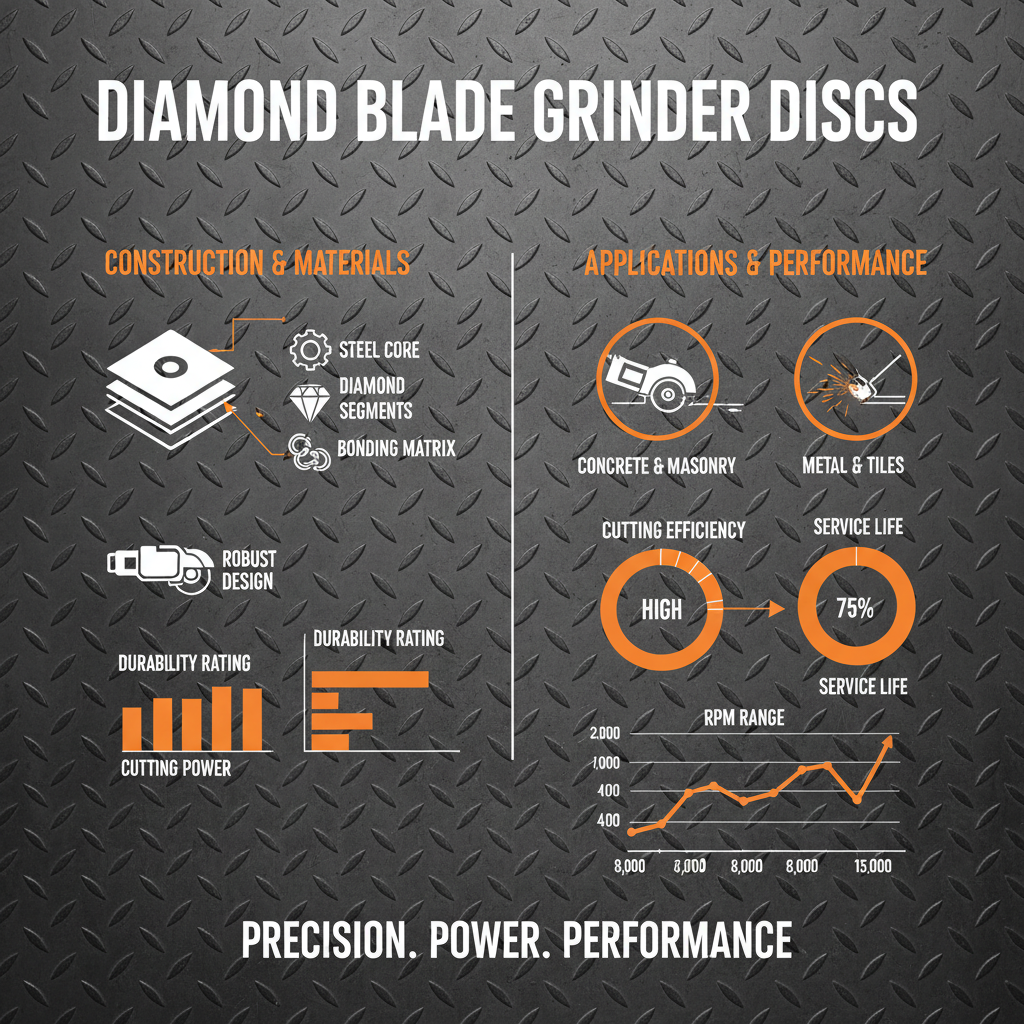
Core Components and Material Science
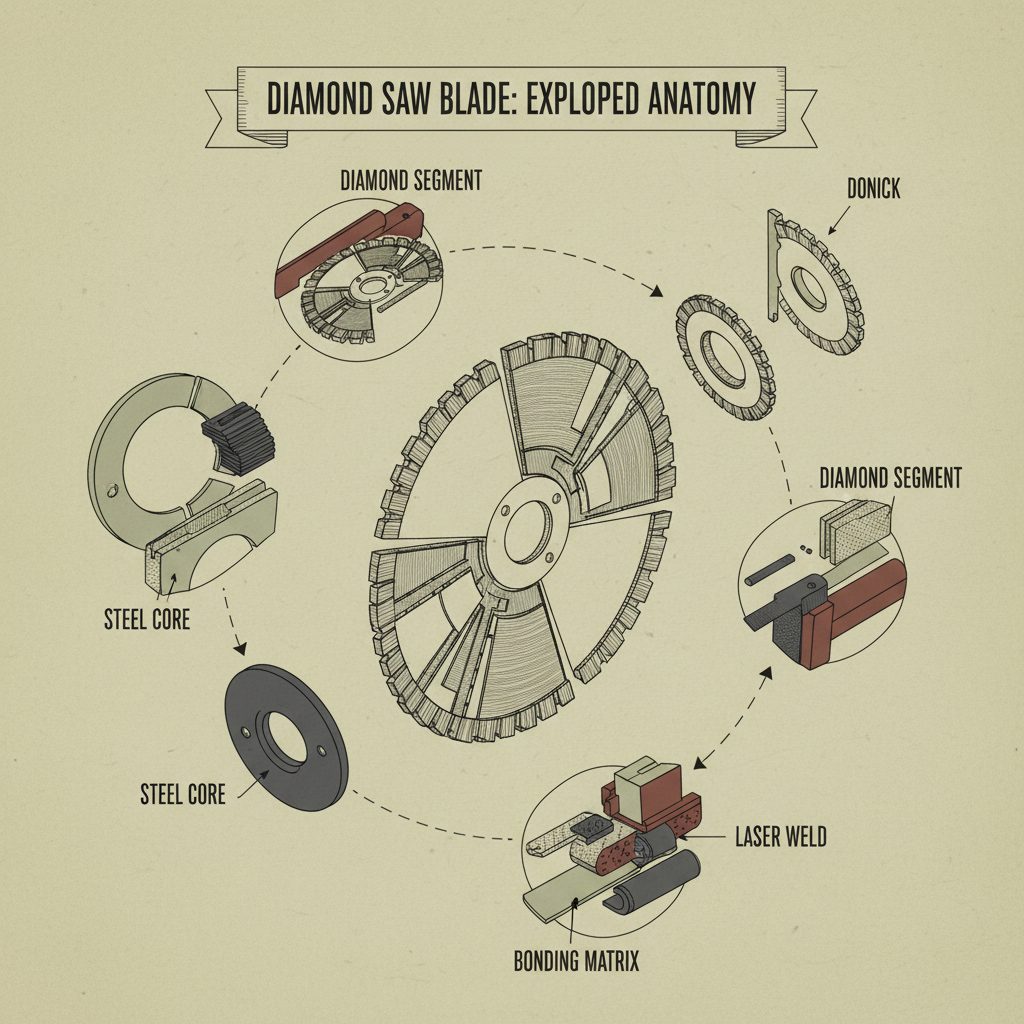
The fundamental components of a diamond blade grinder disc are, unsurprisingly, diamonds and the matrix that holds them. The quality and type of diamond—whether natural or synthetic—significantly impact the blade’s performance. Synthetic diamonds are now widely used, often offering superior consistency and cost-effectiveness. Diamond grit size and shape also dictate cutting characteristics. Coarser grits are ideal for aggressive material removal, while finer grits produce smoother finishes.
The matrix, typically metal or resin-based, plays a crucial role in securing the diamonds and exposing them at the optimal rate during use. Metal-bonded blades excel in applications demanding durability and high-speed cutting, like concrete and asphalt. Resin-bonded blades are often preferred for applications requiring quieter operation and superior surface finishes, such as tile and stone work.
The interplay between the diamond concentration, bonding agent, and core material is a complex science. Manufacturers constantly innovate with new matrix formulations to enhance diamond retention, improve heat dissipation, and prolong blade life. Understanding these material science principles is key to selecting the optimal diamond blade grinder disc for a specific task.
Durability and Lifespan Considerations
The durability of a diamond blade grinder disc isn't solely determined by the quality of the diamonds themselves. Factors such as the type of material being cut, the cutting technique employed, and the cooling method used all contribute to its lifespan. Harder materials necessitate more frequent blade replacement or re-sharpening.
Proper cooling, often achieved with water, is vital. Heat buildup can cause the bonding matrix to wear prematurely and even damage the diamonds. Regular inspection for diamond loss or matrix deterioration is crucial. A well-maintained diamond blade grinder disc can deliver significantly more value over time.
Choosing a disc with a robust core and high-quality bonding agent translates to a longer working life and reduces the overall cost of operation. It’s also important to consider the thickness of the blade – thinner blades generally offer faster cutting speeds, while thicker blades provide greater durability.
Performance Metrics & Application Specificity
Evaluating the performance of a diamond blade grinder disc involves assessing several key metrics, including cutting speed, material removal rate, surface finish, and blade life. These metrics are heavily influenced by the application. For example, a blade designed for dry cutting concrete will perform differently than a blade designed for wet cutting tile.
Application specificity is paramount. Different materials require different diamond grit sizes, bonding agents, and blade geometries. Blades for abrasive materials like granite require different diamond configurations than blades for softer materials like limestone. Therefore, careful consideration must be given to the intended use of the diamond blade grinder disc.
Diamond Blade Grinder Disc Performance Comparison
Global Applications Across Industries
The reach of diamond blade grinder discs extends across numerous industries. In construction, they are essential for cutting concrete, asphalt, brick, and stone. Landscaping professionals rely on them for shaping pavers, cutting curbing, and creating intricate designs. The automotive industry utilizes diamond blades for cutting and grinding exhaust systems and brake rotors.
Furthermore, these discs are vital in the aerospace industry for precision cutting of composite materials. The artistic community employs them for sculpting stone, glass, and ceramics. Even in medical fields, they find application in specialized cutting tasks. From major infrastructure projects to delicate craftsmanship, the demand for high-quality diamond blade grinder discs remains consistent globally.
Advantages and Long-Term Value Proposition
The advantages of using diamond blade grinder discs are manifold. Their superior cutting speed and precision translate to increased productivity and reduced labor costs. The durability of the blades means fewer replacements, resulting in long-term cost savings. Moreover, the clean cuts produced minimize chipping and damage to surrounding materials, enhancing the quality of the finished product.
Beyond the economic benefits, diamond blades contribute to a safer working environment. They produce less dust and noise compared to traditional abrasives, reducing health risks for workers. Investing in a high-quality diamond blade grinder disc is an investment in efficiency, safety, and ultimately, a superior final product.
Future Trends and Sustainable Innovations
The future of diamond blade grinder disc technology is focused on sustainability and efficiency. Researchers are exploring new bonding materials that enhance diamond retention and reduce waste. Developments in laser-guided cutting technology are improving precision and minimizing material loss. There is a growing emphasis on recycling diamond waste and reducing the environmental impact of blade manufacturing.
Furthermore, advancements in digital monitoring and predictive maintenance are enabling users to optimize blade performance and extend their lifespan. We can expect to see smarter blades with integrated sensors that provide real-time data on wear and tear, allowing for proactive replacement and minimizing downtime.
Summary of Future Diamond Blade Grinder Disc Innovation
| Innovation Area |
Technology Description |
Potential Impact |
Implementation Timeline |
| New Bonding Matrices |
Development of eco-friendly and high-retention bonding agents. |
Increased blade lifespan, reduced diamond waste. |
Short-Term (1-3 years) |
| Laser-Guided Cutting |
Integration of laser guidance systems for enhanced precision. |
Improved cut accuracy, reduced material loss. |
Medium-Term (3-5 years) |
| Diamond Recycling |
Processes for recovering and reusing diamonds from worn blades. |
Reduced environmental impact, lower material costs. |
Medium-Term (3-5 years) |
| Smart Blades with Sensors |
Integration of sensors to monitor blade wear and performance. |
Predictive maintenance, optimized blade utilization. |
Long-Term (5+ years) |
| Automated Cutting Systems |
Robotic systems integrated with diamond blade technology. |
Increased efficiency, reduced labor costs. |
Medium-Term (3-5 years) |
| Bio-Based Bonding Agents |
Development of bonding agents from renewable resources. |
Reduced carbon footprint, sustainable manufacturing. |
Long-Term (5+ years) |
FAQS
For cutting concrete, a medium-grit diamond blade (around 30/40 grit) generally performs best. This grit size offers a good balance between cutting speed and blade life. However, heavily reinforced concrete may benefit from a coarser grit, while a finer grit can be used for achieving a smoother finish. Consider the specific application and reinforcement levels when selecting your diamond blade grinder disc.
To maximize blade lifespan, always use appropriate cooling – typically water – to prevent overheating. Avoid excessive pressure and let the blade do the work. Store blades properly to prevent damage and avoid cutting materials the blade isn’t designed for. Regular cleaning and inspection for damage are also crucial steps.
While some diamond blades are designed for dry cutting, most perform best and last longer with water cooling. Dry cutting generates significant heat and dust, which can damage the blade and pose health risks. Always check the blade’s specifications and wear appropriate safety gear, including a respirator, if dry cutting is necessary.
Segmented blades have teeth-like segments for faster material removal, making them ideal for general-purpose cutting and rough work. Continuous rim blades have a solid diamond edge, providing a cleaner, smoother cut, and are best for chipping, polishing, and delicate materials. The best choice depends on your specific application.
The blade diameter should match the size of your grinder or saw. Using an incorrect diameter can be dangerous and damage the equipment. Also, consider the depth of cut required. Larger diameter blades can cut deeper but may require more powerful equipment.
Always wear safety glasses, a dust mask or respirator, hearing protection, and gloves. Ensure the workpiece is securely clamped. Inspect the blade for damage before use. Never exceed the blade's maximum RPM rating. And, be aware of your surroundings and keep bystanders at a safe distance.
Conclusion
In conclusion, diamond blade grinder discs are vital tools that underpin progress across diverse industries. Their unique combination of hardness, durability, and precision makes them indispensable for cutting and grinding a wide range of materials. Understanding the core components, performance metrics, and future innovations in this field empowers professionals to select the optimal blade for their specific needs, maximizing efficiency, safety, and cost-effectiveness.
As technology advances, we can anticipate even more sustainable and efficient diamond blade solutions. Continued research into new bonding materials, recycling processes, and automated cutting systems promises to further reduce the environmental impact and enhance the performance of these essential tools. For high-quality diamond blade grinder discs and expert guidance, visit our website today: www.mydiamondblade.com.










.png )