Choosing The Right Dual Action Polisher Pads For A Flawless Vehicle Finish
Choosing the Right Dual Action Polisher Pads for a Flawless Finish
Achieving a professional-grade finish on your vehicle, boat, or other surfaces requires the right tools, and among those, dual action polisher pads are crucial. These pads aren’t one-size-fits-all; understanding the different types and their applications is key to maximizing your polishing results. This guide will delve into the world of dual action polisher pads, covering their types, materials, and how to choose the perfect pad for your specific needs. Selecting the correct pad can dramatically improve efficiency and minimize the risk of damaging your paintwork.

Understanding the Different Types of Dual Action Polisher Pads
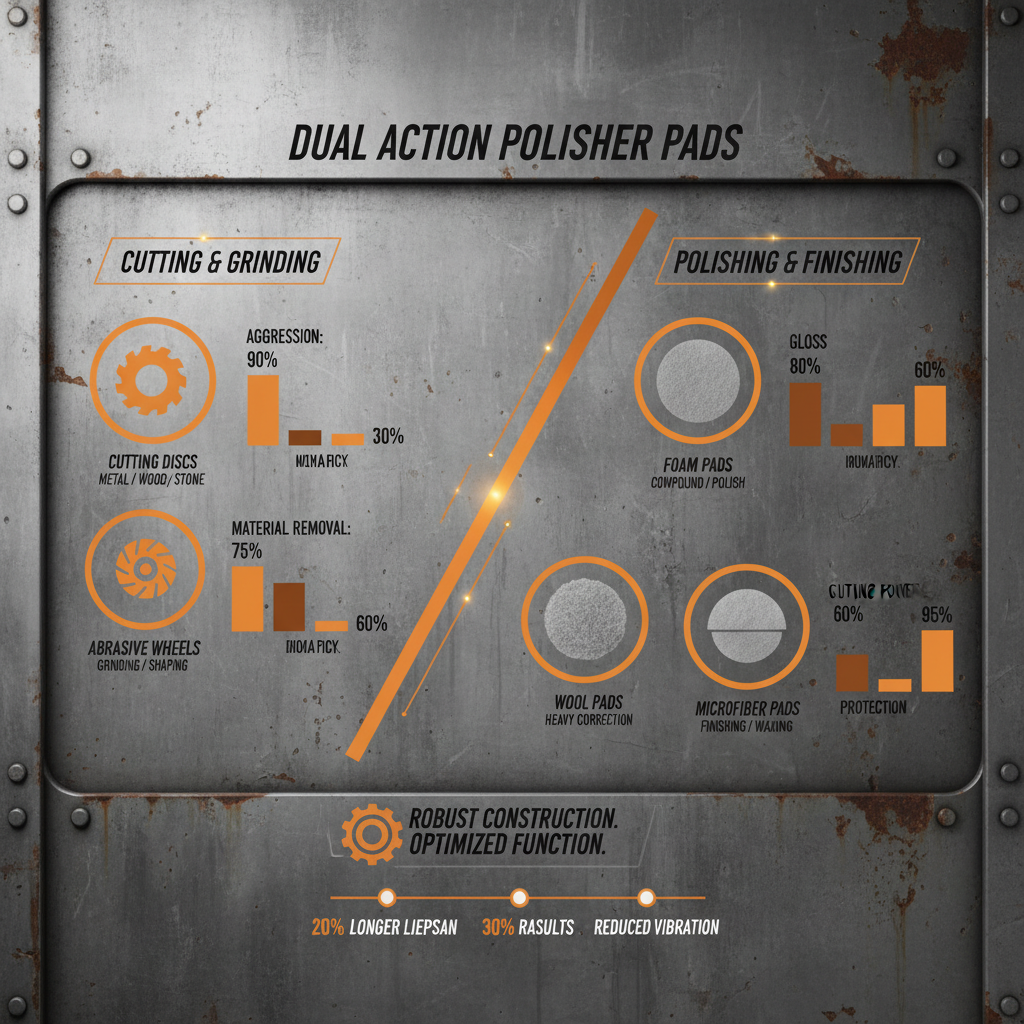
Dual action polisher pads come in several varieties, each designed for a specific stage of the polishing process. These typically include cutting pads, polishing pads, and finishing pads. Cutting pads are aggressive and remove defects quickly, polishing pads refine the surface, and finishing pads deliver a high-gloss shine. It's important to understand the level of correction needed for your surface to choose the appropriate pad. Using the wrong pad can lead to swirl marks or even damage the paint.
Key Highlights: Cutting pads are used for severe defects, polishing pads for moderate defects, and finishing pads for refining the paint and enhancing gloss.
Pad Materials: Foam vs. Microfiber Dual Action Polisher Pads
The material of the pad significantly impacts its performance. Foam pads are the most common, offering a good balance of cutting power and finish. Microfiber pads, on the other hand, are typically more aggressive and excel at defect removal. The density and cell structure of foam pads also vary, influencing their cutting and finishing capabilities. Closed-cell foam pads are less porous and offer more control, while open-cell foam pads are more forgiving. Consider the paint hardness and the severity of the imperfections when choosing between foam and microfiber.
Material Comparison:
• Foam Pads: Versatile, good for all levels of correction, offer a variety of densities.
• Microfiber Pads: More aggressive, excellent for defect removal, ideal for harder paints.
• Hybrid Pads: Combine the benefits of both foam and microfiber, offering a balance of cutting power and finish.
Choosing the Right Pad for Your Paint Type
Different paint types react differently to polishing. Softer paints require less aggressive pads to avoid damage, while harder paints can handle more aggressive pads. Japanese and Korean paints are generally softer and require more finesse, while European and American paints are typically harder. Consider the paint’s age and condition as well; older paints may be more brittle and require a gentler approach. My Diamond Blade offers a variety of pads suitable for all paint types.
Maintaining Your Dual Action Polisher Pads for Optimal Performance
Proper pad maintenance is essential for maximizing their lifespan and performance. After each use, clean your pads thoroughly with a pad cleaning brush or pad washer to remove polish residue and contaminants. Dried polish can clog the pad's cells, reducing its cutting power and increasing the risk of scratching. Store your pads in a clean, dry place away from direct sunlight. Regularly inspect your pads for wear and tear, and replace them when they become worn or damaged.
Product Spotlight: My Diamond Blade Pad Selection
At My Diamond Blade, we offer a comprehensive range of dual action polisher pads to suit every need. From aggressive cutting pads to ultra-soft finishing pads, we have the perfect pad for your project. Our pads are made from high-quality materials and are designed to deliver exceptional performance and durability. Browse our selection today and experience the difference!
Conclusion: Unlock a Flawless Finish with the Right Pads
Choosing the right dual action polisher pads is vital for achieving a professional-grade finish. Understanding the different types, materials, and their applications will empower you to tackle any polishing project with confidence. Investing in quality pads from My Diamond Blade ensures optimal performance and long-lasting results. Don't settle for less than perfection – choose the right pads and experience the difference!
Frequently Asked Questions (FAQs)
How often should I replace my dual action polisher pads?
The frequency of pad replacement depends on usage and the type of work being done. Generally, cutting pads wear out faster than polishing and finishing pads. If you notice the pad is becoming clogged, losing its shape, or no longer cutting effectively, it's time for a replacement. A good rule of thumb is to replace cutting pads after 5-10 uses, polishing pads after 10-15 uses, and finishing pads after 15-20 uses. Proper cleaning and storage can extend the lifespan of your pads, but ultimately, they will need to be replaced to maintain optimal performance.
Can I use the same pad for both compounding and polishing?
It’s generally not recommended to use the same pad for both compounding and polishing. Compounding is a more aggressive process that can contaminate the pad with abrasive compounds. Using a contaminated pad for polishing can introduce swirl marks and reduce the final finish quality. It's best to use separate pads for each stage of the polishing process. Always start with a clean pad for each step to ensure the best results.
What’s the best way to clean my dual action polisher pads?
The best way to clean your pads is to use a pad cleaning brush or a dedicated pad washer. A pad cleaning brush effectively removes polish residue and contaminants from the pad's surface. A pad washer utilizes a cleaning solution and mechanical action to thoroughly clean the pad. Avoid using harsh chemicals or solvents, as these can damage the pad's material. Ensure the pad is completely dry before storing it.
Related Products
Related Products





Address
No.30 Gaoying Road ,Chang'an District,Shijiazhuang,Hebei Province
Business Hours
Mon to Saturday : 8.00 am - 7.00 pm
Sunday & Holidays : Closed
.png )