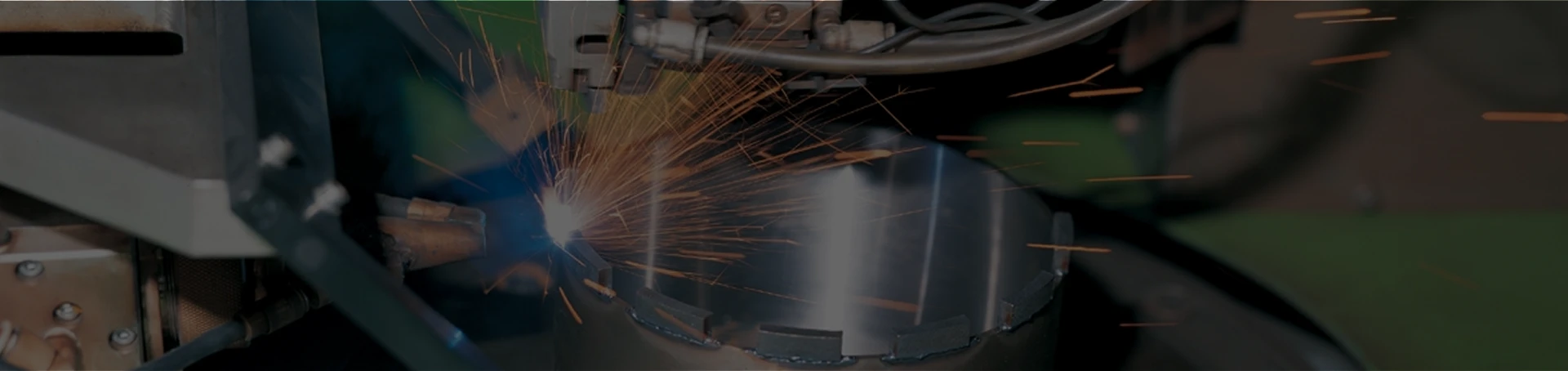
Double Row Cup Wheel: Faster, Smoother, Longer-Lasting?
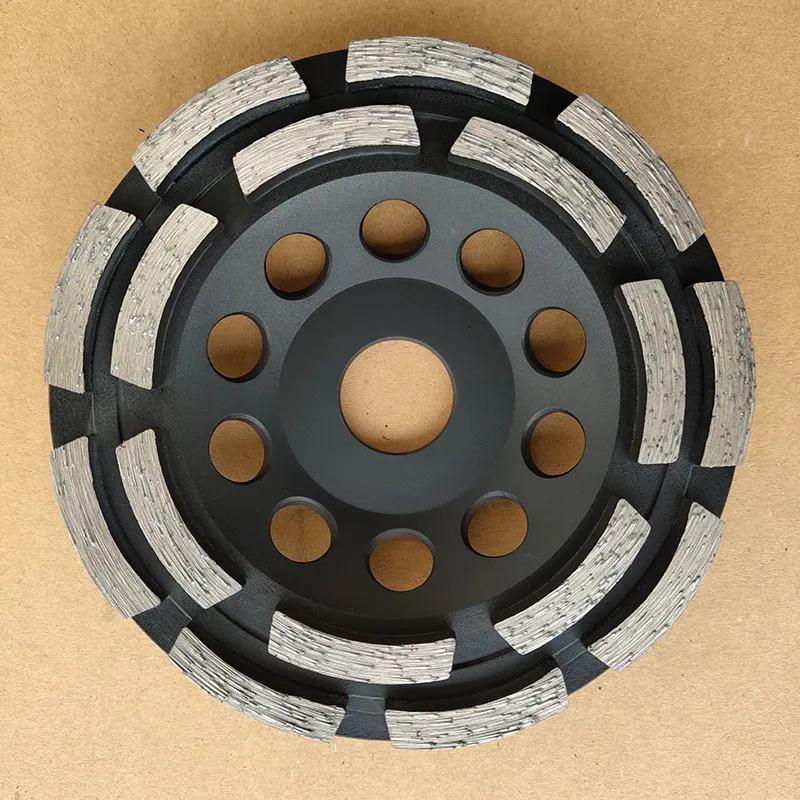
Diamond Double Row Cup Wheel: Field Notes, Specs, and Real-World Picks
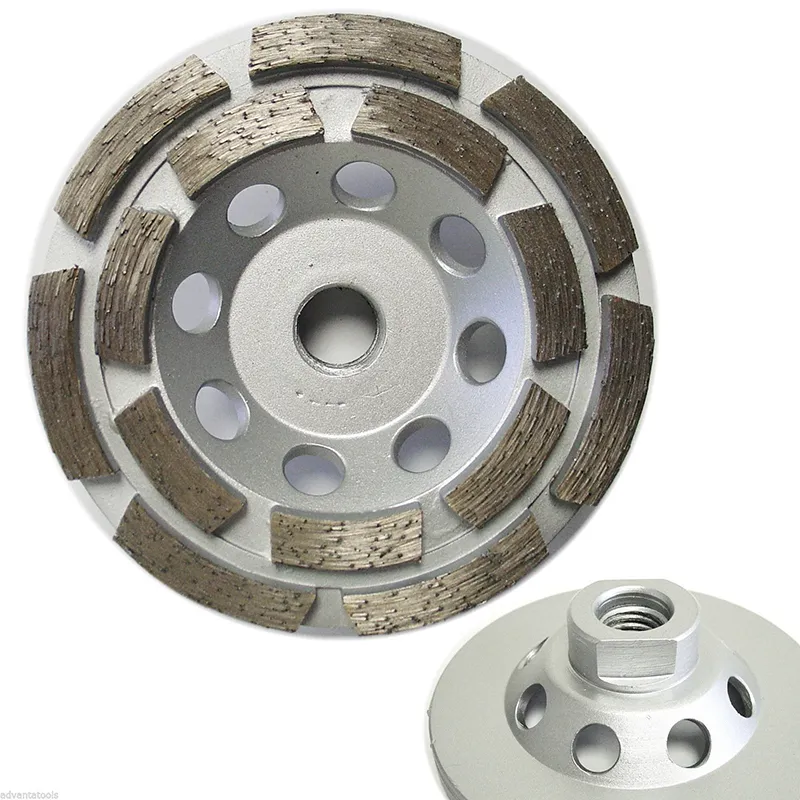
If you’re resurfacing concrete or knocking back masonry high spots, the tool that keeps coming up is the double row cup wheel. I’ve seen crews burn through cheap wheels in a single afternoon; the good ones last, run smooth, and don’t chatter. This one from Shijiazhuang (No.30 Gaoying Road, Chang'an District, Hebei Province) has been making the rounds in contractor chats—mostly because it’s quick on C25–C40 concrete yet doesn’t gouge.
What’s trending in grinding right now
Three things: cordless angle grinders with higher sustained RPM, tighter dust regs, and more decorative concrete refurbs than new pours. That means you want a double row cup wheel that: - handles dry grinding with less loading, - mates well with shrouds, - and keeps a steady bite without overheating. Sounds simple—but it’s not.
Quick spec sheet (real-world oriented)
| Diameters | 4", 4.5", 5", 7" (other sizes on request) |
| Arbor/Bore | 7/8", 5/8"-11, M14 (≈ industry common) |
| Segment type | Double-row, high-diamond concentration, 5–7 mm height ≈ |
| Bond options | Soft/Med/Hard for green, standard, or hard concrete |
| Max RPM | Up to 13,300 (size dependent; check label) |
| Mounting | Angle grinder or floor grinder adapters |
| Use | Dry or wet; dust shroud highly recommended |
How it’s made (and tested)
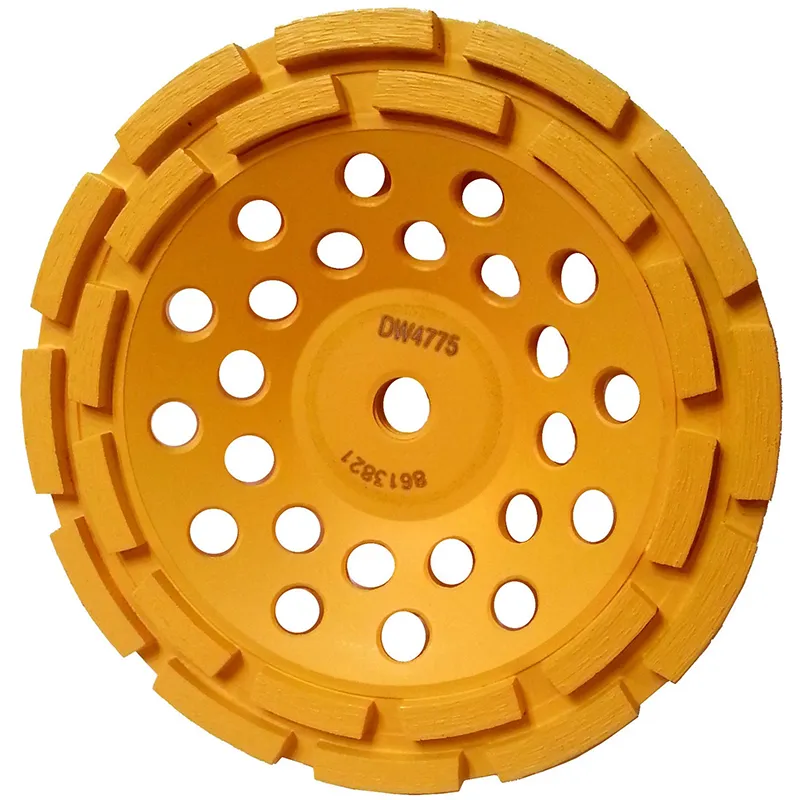
Materials: industrial diamond + metal bond (copper/iron/cobalt family blends). Segments are laser-welded or high-temp brazed—both are used in the factory; laser-weld is my pick for aggressive concrete. Balancing is better than average, which you’ll feel as lower vibration.
Process flow (simplified): powder mixing → hot pressing of segments → weld to steel cup → stress relief → grind/true → balance check → spin test → label/traceability. Testing: ring test and spin test to 1.5× rated speed (EN 13236), runout ≤ 0.5 mm typical, hardness check per internal SOP, sample life tests on C30 concrete. Service life I’ve seen: around 30–60 hours on standard concrete with moderate pressure; your mileage varies with technique and substrate.
Applications and advantages
Use a double row cup wheel for: coating removal prep, leveling slabs, edge work around columns, masonry smoothing. Advantages? Fast stock removal, stable tracking, less swirl than single-row, and segments that stay put. Many customers say it “just feels planted,” which, to be honest, is what you want on long edge passes.
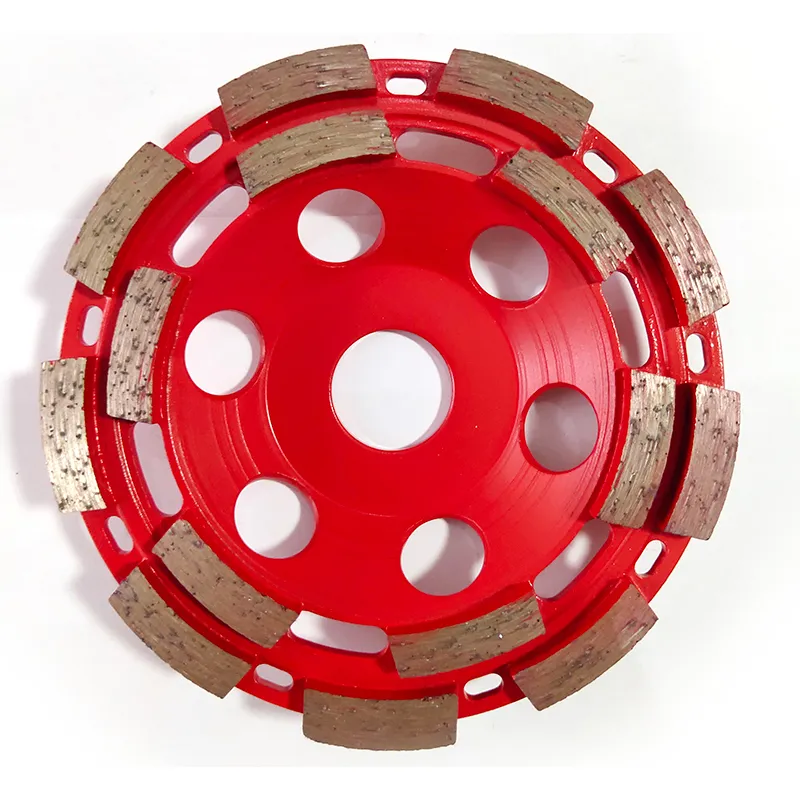
Vendor snapshot: value vs. trade-offs
| Vendor | Segment height | Typical life (C30) | Standards/Marking | Notes |
| MyDiamondBlade OEM | 5–7 mm | ≈ 30–60 h | EN 13236 on label; ISO 9001 factory | Good value, stable balance |
| Competitor A | 6 mm | ≈ 40–70 h | EN 13236 + ANSI B7.1 info | Pricier; low vibration |
| Competitor B | 4.5–5 mm | ≈ 20–35 h | EN 13236 | Budget; faster wear |
Customization
Private label, color coding, bore type, and bond tuning are available. For very hard terrazzo or cured concrete, ask for a softer bond. For green concrete or brick, go harder to avoid glazing. Certificate of Conformity and test data sheets are issued on batch request.
Field notes and a quick case
Case: Phoenix garage refurb, ~3,200 sq ft. Two 7" grinders, dust shrouds, medium-bond double row cup wheel. Crew reported stock removal ≈ 1.2–1.5 mm/pass, no segment loss, and finish ready for 30-grit resin after one sweep. They swapped wheels at ~42 hours average—respectable for that slab.
Safety reminder: use guards, eye/ear protection, and comply with silica dust rules. Wet cut when feasible; otherwise, pair with a HEPA vac and keep RPM within the wheel’s marked limit.
Standards, compliance, and documentation
Labeled to EN 13236; factory quality system typically ISO 9001. Usage should reflect ANSI B7.1 safety practices and OSHA/EN dust control guidance. Real-world data sheets are available—ask for spin-test and runout results by lot.
Authoritative references
- EN 13236: Safety requirements for superabrasive products.
- ANSI B7.1: Safety requirements for abrasive wheels.
- OSHA 29 CFR 1926.1153: Respirable crystalline silica in construction.
- ISO 9001:2015 Quality management systems (factory-level certification).
Related Products
Related Products





Address
No.30 Gaoying Road ,Chang'an District,Shijiazhuang,Hebei Province
Business Hours
Mon to Saturday : 8.00 am - 7.00 pm
Sunday & Holidays : Closed
.png )