PCD Grinding Shoes: Faster Removal, Longer Life—Why Us?
PCD Grinding Shoes: Insider Notes, Real Specs, and Where They Shine
If you’re chasing down thick epoxy, gummy elastomeric coatings, or stubborn adhesive, pcd grinding shoes are the blunt-force tool that still delivers precision when used right. I’ve watched crews lose half a day with abrasives that glaze; switching to PCD + carbide nib hybrids usually flips the script—faster cut, less chatter, and lower heat.
What this product is
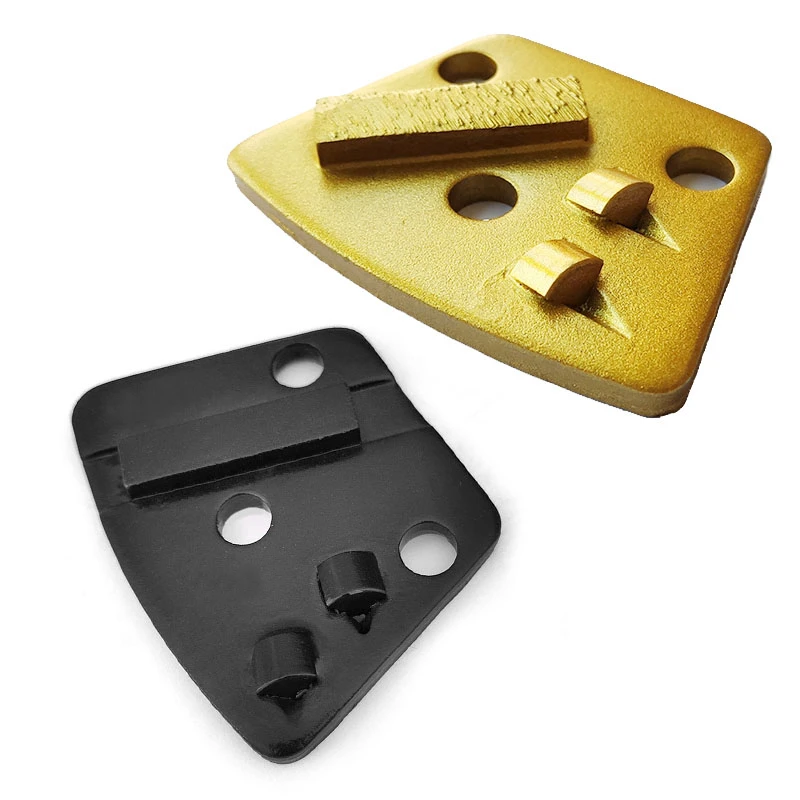
pcd grinding shoes here refers to: “Pcd Grinding Shoes For Removal Of Resins, Epoxies, Elastomeric Coating And Other Coatings On Large Concrete And Masonry Areas” from MyDiamondBlade (Origin: No.30 Gaoying Road, Chang'an District, Shijiazhuang, Hebei Province). The assembly mixes PCD cutters with Tungsten Carbide nibs plus a stabilizing diamond segment—designed for fast, aggressive removal of paint, acrylic, foam, epoxy, adhesive residue, and screed.
Industry trend check
Two things are driving demand: stricter dust rules (OSHA/ICRI push better containment) and the migration to planetary grinders with quick-change plates. Contractors want fewer passes, predictable life, and setups that won’t gouge the slab before polishing. It seems that hybrid PCD + support-segment designs are now the standard for “fast but controlled” removal.
Product specs (typical)
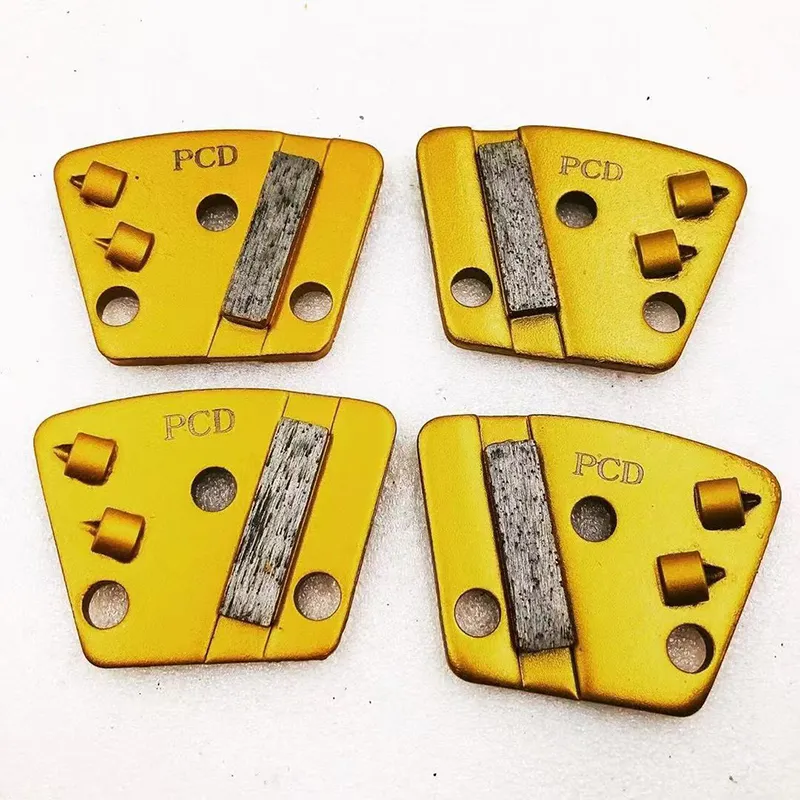
| Construction | PCD cutters + Tungsten Carbide nibs + diamond support segment |
| PCD type/geometry | Polycrystalline diamond, full or 1/2 round; left/right orientation available |
| Diamond segment (support) | Aggressive 16/20–30/40 grit; helps level and limit deep gouging |
| Mounting options | Redi-Lock, HTC, Lavina QuickChange, magnetic trapezoid (varies by order) |
| Recommended RPM | ≈ 450–650 RPM on planetary heads (real-world use may vary) |
| Typical removal targets | Epoxy 1–4 mm, elastomeric membranes, mastic, paint, acrylics, foam underlay |
Process flow, testing, and service life
Materials: industrial PCD tips, carbide nibs, high-strength steel shoe, silver-based braze, diamond segments. Methods: precision brazing, flatness grinding, dynamic balancing, and orientation setting (L/R). Testing: segment pull-off checks (≥ ≈1,500 N), runout ≤ ≈0.2 mm, and safety compliance aligned with EN 13236 guidelines. Typical life: around 400–900 m² per set on epoxy 2–3 mm, medium concrete (≈25–35 MPa). Heavier elastomeric and high-silica slabs will shorten life—no surprise there.
Applications and real feedback
- Flooring demo and prep before new resin floors (warehouses, food plants, parking decks).
- Facility maintenance removing painted safety lines or failed membranes.
- Restoration contractors tackling adhesive after VCT removal.
Many customers say these pcd grinding shoes cut removal time by 30–50% versus standard metal-bonds, especially on gummy coatings that just smear otherwise.
Field test snapshot
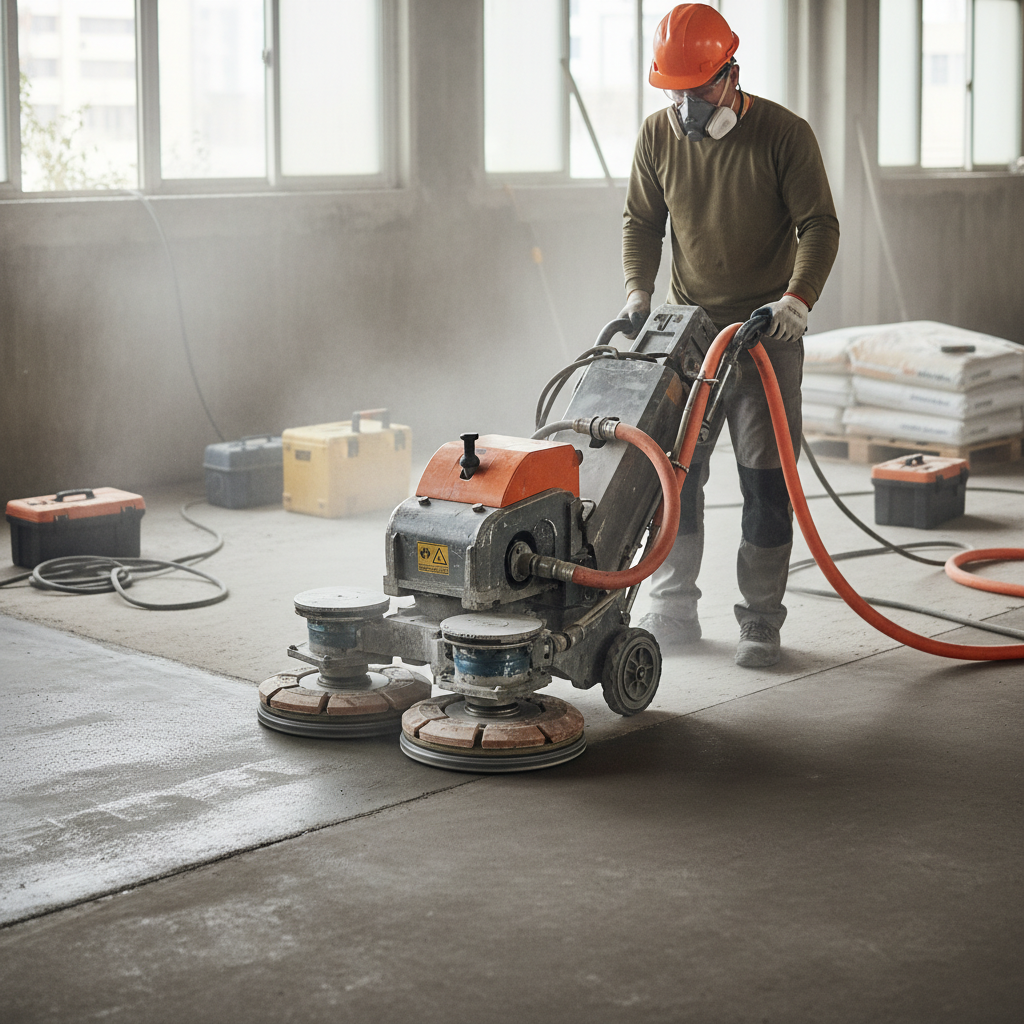
Internal demo, 3-head 650 mm grinder, 6 shoes fitted: epoxy 2–3 mm on 28 MPa concrete. Dust control per OSHA silica rule using HEPA extractor. Removal rate ≈ 35–55 m²/hr; average shoe set life ≈ 620 m². CSP after pass: ≈ CSP 3–4 (ICRI), which is exactly where many installers want it before profiling/patching.
Case studies (short and real-world)
- Cold storage retrofit: Elastomeric membrane, 1,100 m². Team swapped to pcd grinding shoes, two-pass strategy; time dropped from 2.5 to 1.6 days. Minimal smearing at lower RPM.
- Retail repaint: Acrylic + line striping. Half-PCM setup (1/2 PCD + support segment) reduced gouge marks, saving a full skim coat. Supervisor was… relieved.
Vendor comparison (indicative)
| Vendor | Price | Lead time | Customization | QC/Standards |
| MyDiamondBlade | Mid | Stock: fast; custom: ≈7–12 days | Mounts, PCD count, orientation | EN 13236-aligned; documented pull tests |
| Generic marketplace | Low | Variable | Limited | Inconsistent; specs often vague |
| EU premium brand | High | Steady | Broad, but pricier | Tight traceability; extensive test data |
Customization and usage tips
Ask for left/right orientation matched to your grinder rotation, plus “half PCD” patterns if you’re worried about gouging on soft overlays. Run light head pressure first, keep RPM moderate, and cross-hatch your passes. And yes—pair with a compliant dust extractor. Your lungs will thank you.
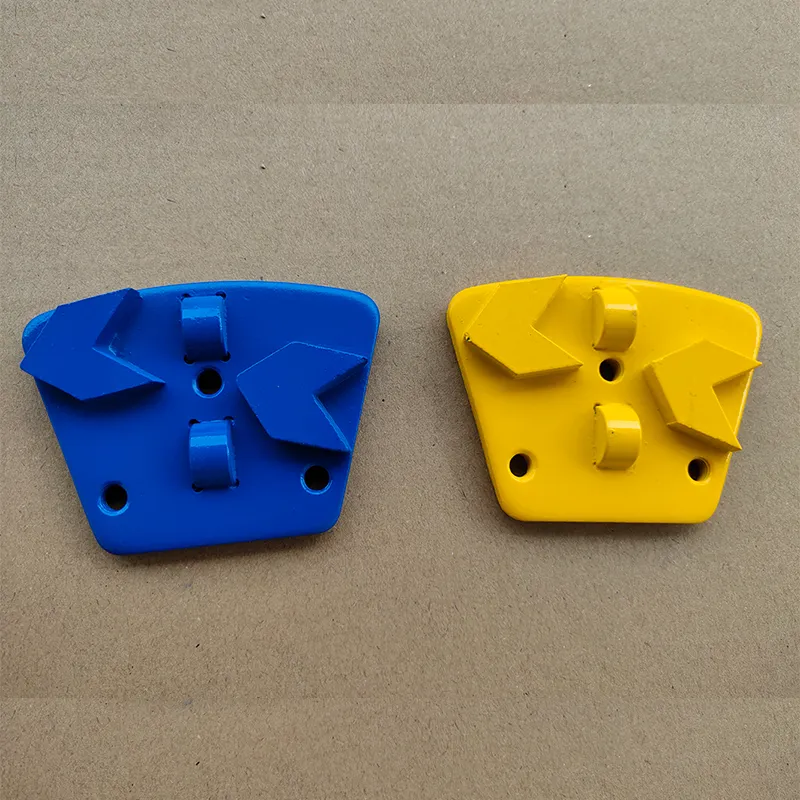
Final word: for heavy coating removal on concrete or masonry, pcd grinding shoes with carbide nibs and a diamond support segment hit the sweet spot of speed, control, and predictable life—assuming the setup matches your machine and slab.
Authoritative citations
- ICRI Guideline No. 310.2R – Selecting and Specifying Concrete Surface Preparation.
- EN 13236 – Safety requirements for superabrasive products (relevant to PCD/diamond tools).
- OSHA 29 CFR 1926.1153 – Respirable Crystalline Silica Standard for Construction.
- ASTM D4259 – Standard Practice for Abrading Concrete to Prepare for Bonded or Coated Flooring.
Related Products
Related Products





Address
No.30 Gaoying Road ,Chang'an District,Shijiazhuang,Hebei Province
Business Hours
Mon to Saturday : 8.00 am - 7.00 pm
Sunday & Holidays : Closed
.png )