Professional Guide to Using Diamond Tile Polishing Pads for Shine
Mastering the Shine: The Ultimate Guide to Diamond Tile Polishing Pads
Achieving a mirror-like finish on stone and ceramic surfaces requires more than just effort; it requires the right precision tools. diamond tile polishing pads are the gold standard for professionals seeking to eliminate scratches and restore the natural brilliance of tiles. Whether you are working with granite, marble, or porcelain, understanding the nuances of grit sequences and material compatibility is essential for a flawless result. In this comprehensive guide, we will explore how to select, use, and maintain these essential tools to ensure your projects stand out with a professional, high-gloss sheen.
How Diamond Tile Polishing Pads Work
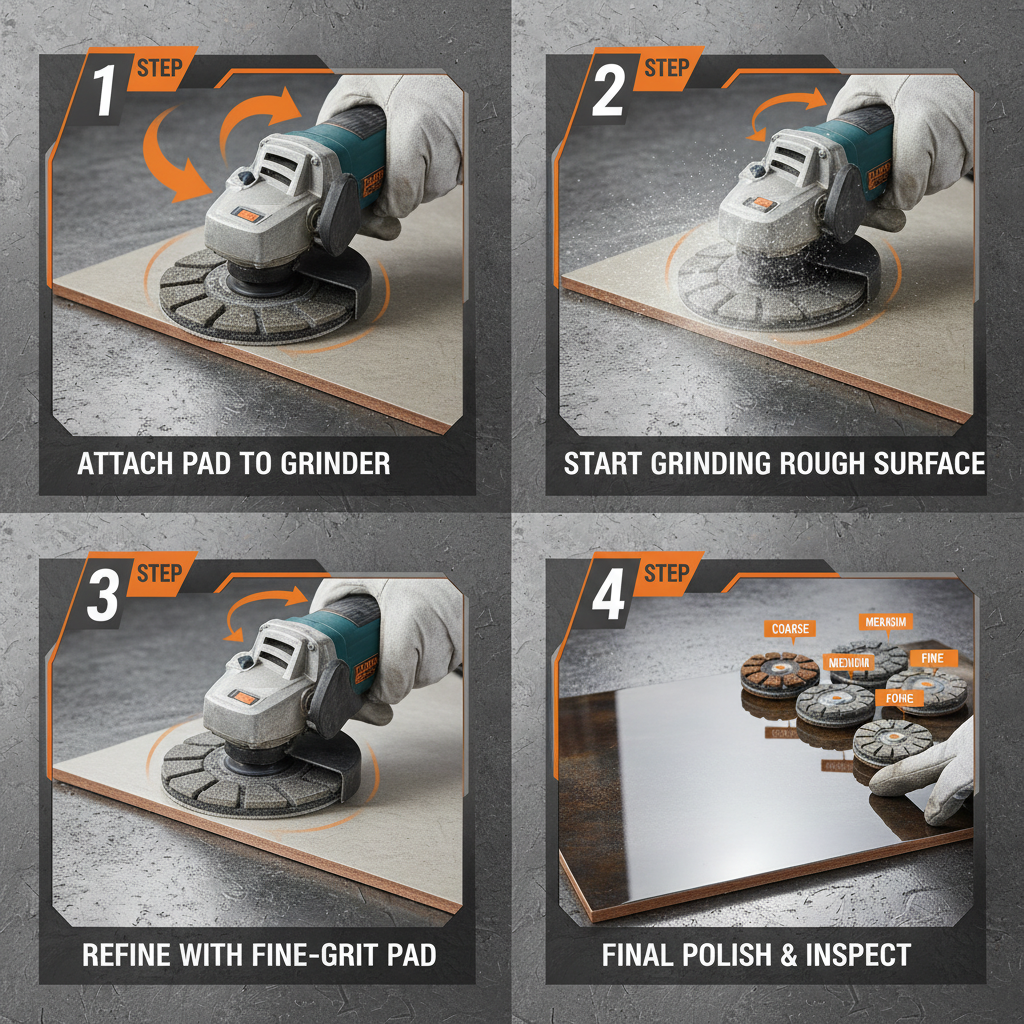
At the heart of every high-quality polishing pad is industrial-grade diamond abrasive. Unlike traditional sandpaper, diamond tile polishing pads utilize synthetic diamonds embedded in a resin matrix. As the pad rotates, the resin wears away slightly, constantly exposing new, sharp diamond edges that shave off microscopic layers of the tile surface. This process, known as abrasive leveling, removes imperfections and creates a surface so smooth that it reflects light perfectly, resulting in a high-gloss finish. The efficiency of this process depends heavily on the bond hardness and the quality of the diamond concentration.
Pro Tip: Always start with a coarse grit to remove deep scratches and gradually move to finer grits. Skipping steps in the sequence can leave "pig-tails" or swirl marks that are nearly impossible to remove later.
Choosing the Right Grit for Your Project
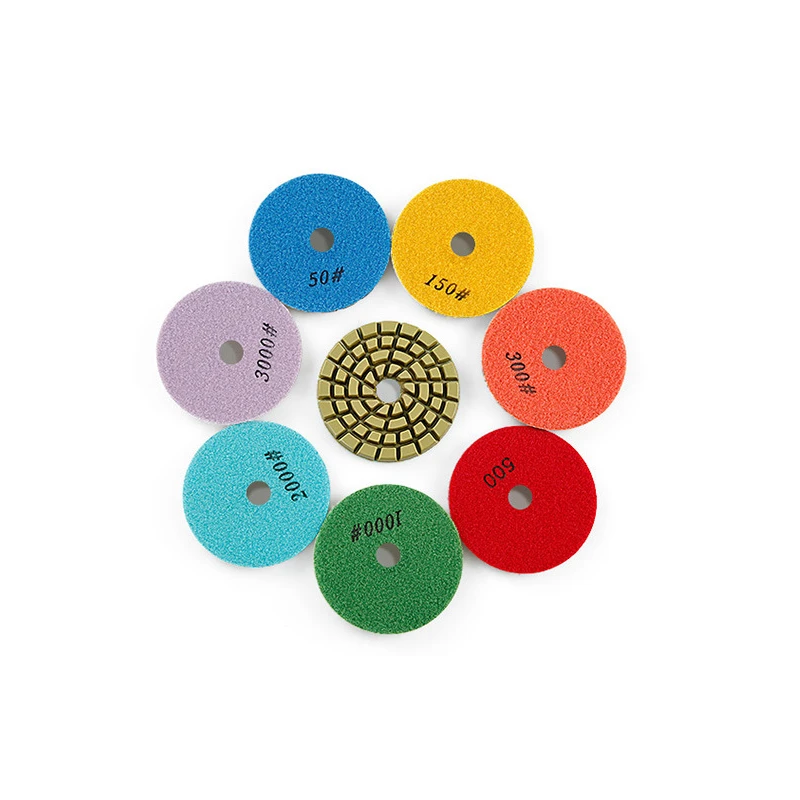
The grit number indicates the size of the diamond particles. A lower number means larger, coarser diamonds for heavy material removal, while a higher number indicates finer particles for polishing. Selecting the correct sequence of diamond tile polishing pads is the difference between a dull surface and a professional shine. For most hard tiles, a progression from 50 grit up to 3000 grit is recommended to achieve a luxury finish.
Comparison: Resin Bond vs. Metal Bond Pads
Depending on the hardness of the tile and the stage of the project, you may need to choose between resin-bonded and metal-bonded diamond tile polishing pads. Metal bonds are incredibly aggressive and durable, making them ideal for initial grinding and shaping of extremely hard materials like porcelain. Resin bonds, however, are more flexible and provide a much smoother finish, making them the primary choice for the final polishing stages. Using the wrong bond can lead to premature pad wear or surface damage.
Wet vs. Dry Polishing Techniques
One of the most common questions when using diamond tile polishing pads is whether to use water. Wet polishing is generally preferred because water acts as a coolant, preventing the diamonds from overheating and the tile from cracking. Furthermore, water flushes away the debris (slurry), keeping the pores of the pad open for maximum efficiency. Dry polishing is possible with specific "Dry" rated pads and is useful for small repairs where water setup is impractical, but it requires heavy vacuuming to prevent dust inhalation.
Advantages of Wet Polishing:
• Significantly extends the lifespan of the polishing pads
• Prevents thermal shock and surface burning on delicate tiles
• Eliminates hazardous airborne silica dust
• Produces a clearer, more consistent high-gloss finish
Technical Specifications for Professional Pads
To ensure you are purchasing professional-grade diamond tile polishing pads, it is important to look at the technical specifications. The quality of the hook-and-loop backing ensures the pad doesn't slip during high-RPM rotation, and the diamond concentration determines how many square feet a single pad can polish before needing replacement. Below are the standard specifications for our premium range.
Best Practices for Maintaining Your Polishing Tools
Investing in high-quality diamond tile polishing pads is only half the battle; proper maintenance ensures they last through multiple projects. After each use, rinse the pads thoroughly with clean water to remove all abrasive slurry. If slurry dries on the pad, it can "glaze" the surface, reducing the effectiveness of the diamonds. Store your pads in a cool, dry place, avoiding direct sunlight which can degrade the resin bond over time. By following these simple steps, you can maximize the value of your tooling and ensure consistent results.
Conclusion: Elevate Your Finish with Professional Tools
Achieving a professional-grade shine is an art that relies on the science of abrasion. By utilizing the correct sequence of diamond tile polishing pads and adhering to wet-polishing best practices, you can transform any dull surface into a stunning architectural feature. Whether you are a contractor or a dedicated DIY enthusiast, the right tools make the process faster, easier, and significantly more rewarding. Visit our store to find the perfect polishing solution for your next project.
Frequently Asked Questions (FAQs)
How many grits do I actually need to get a high gloss?
For a true mirror finish, you typically need a progression of at least 5 to 7 grits. A common professional sequence is 50, 100, 200, 400, 800, 1500, and 3000. If the tile is already in good condition, you can start at 200. However, skipping too many steps will leave visible scratches from the coarser pads, which will be amplified once you reach the final high-gloss stages. Patience during the grit progression is the key to a flawless finish.
Can I use these pads on a standard angle grinder?
Yes, most diamond tile polishing pads are designed to work with standard angle grinders, provided you use a backing pad (the Velcro plate). However, we strongly recommend using a variable-speed grinder. High speeds can generate excessive heat, which may burn the resin or crack the tile. Setting your grinder to a medium speed ensures a more controlled and safer polishing process.
Why is my tile not getting shiny even after using 3000 grit?
This usually happens for two reasons: either a previous grit step was skipped, or the pad has become "glazed." If you didn't spend enough time with the 800 or 1500 grit pads, the 3000 grit pad cannot remove those deeper scratches. Secondly, if the pad is clogged with debris, the diamonds cannot cut. Try cleaning the pad or replacing it. Also, ensure you are using a consistent amount of water to keep the surface lubricated and clear of slurry.
Are these pads suitable for natural marble and granite?
Absolutely. In fact, resin-bonded diamond tile polishing pads are specifically engineered for natural stones. Marble, being softer, polishes very quickly and reaches a high shine with relatively few grit steps. Granite is harder and requires more time and a stricter adherence to the grit sequence. These tools are the industry standard for restoring countertops, floors, and wall cladding in both residential and commercial settings.
Prev This is the first article
Related Products
Related Products





Address
No.30 Gaoying Road ,Chang'an District,Shijiazhuang,Hebei Province
Business Hours
Mon to Saturday : 8.00 am - 7.00 pm
Sunday & Holidays : Closed
.png )