
High-Performance Diamond Cup Wheels for Concrete & Stone
The Indispensable Role of Diamond Cup Wheels in Modern Surface Preparation
In the vast landscape of construction, renovation, and material processing, precision and efficiency are paramount. Professionals constantly seek tools that deliver superior performance, extended lifespan, and cost-effectiveness. Among these essential tools, diamond cup wheels stand out as critical abrasives for surface preparation. These versatile grinding tools, often referred to as diamond cup grinding wheels, are engineered for aggressive material removal, leveling, and shaping of various hard surfaces, from concrete to natural stone. Their unique design and exceptional hardness make them indispensable for a wide array of industrial and commercial applications.
The global demand for high-performance grinding solutions continues to rise, driven by advancements in construction methodologies and the need for durable, aesthetically pleasing finishes. Industry trends highlight a growing emphasis on dust-free operation, improved ergonomic design, and specialized segment configurations to tackle diverse material properties. As a leading solution for heavy-duty grinding, the diamond cup is evolving, with manufacturers innovating to enhance segment life, cutting speed, and overall user experience. Understanding the intricate technology behind these tools is crucial for maximizing their potential in any demanding environment.
Engineering Excellence: The Manufacturing Process of Diamond Cup Wheels
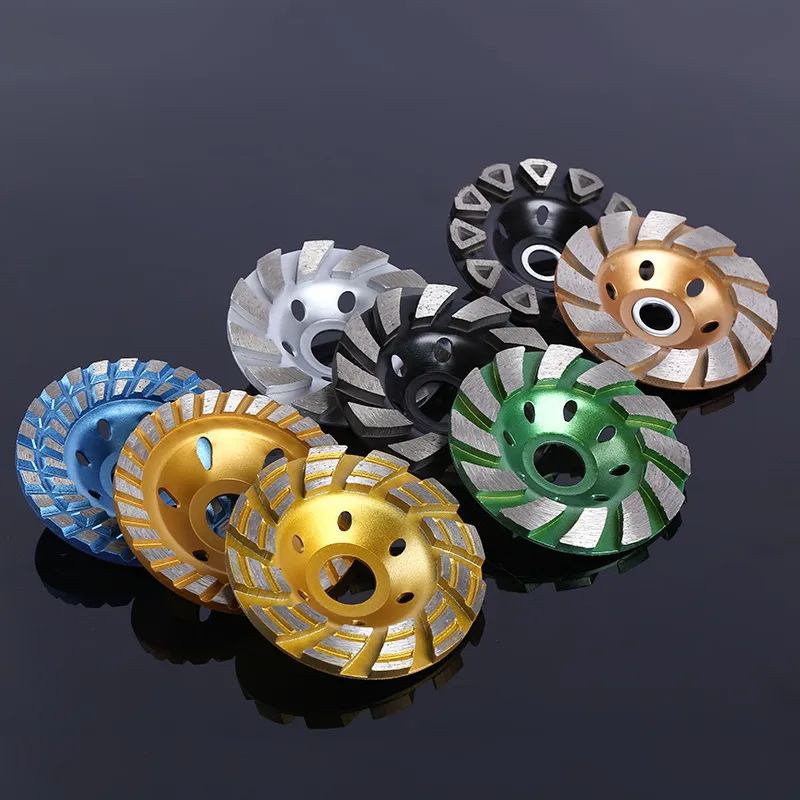
The superior performance of a cup grinding wheel stems from a sophisticated manufacturing process that meticulously combines robust materials with advanced engineering techniques. At its core, a diamond cup wheel consists of a durable metal body, typically steel or aluminum, and an array of diamond-impregnated segments. The precision in creating these segments and securely attaching them to the body dictates the wheel's efficiency, lifespan, and safety.
Core Materials and Their Role:
- Diamond Abrasive: Synthetic industrial diamonds, carefully graded by grit size (e.g., 30/40 grit for aggressive removal, 80/100 grit for finer finishes), are the active cutting agents. Their extreme hardness (10 on the Mohs scale) enables them to abrade even the toughest materials.
- Metal Bond Matrix: A carefully formulated blend of metal powders (cobalt, iron, nickel, copper, tungsten carbide, etc.) holds the diamond particles in place. The bond's hardness and wear rate are crucial; a softer bond releases dull diamonds more quickly to expose new sharp ones, suitable for hard materials, while a harder bond retains diamonds longer for softer, more abrasive materials.
- Steel or Aluminum Body: The structural foundation of the diamond cup, designed to withstand high rotational speeds and significant grinding forces. Steel bodies offer maximum durability for heavy-duty applications, while aluminum bodies provide lighter weight for reduced fatigue and specific machine requirements.
Key Manufacturing Processes:
The primary methods for manufacturing diamond segments and attaching them to the wheel body are sintering and brazing:
- Segment Preparation (Powder Mixing): Precisely weighed diamond particles are thoroughly mixed with the chosen metal bond powders. This ensures a homogeneous distribution of diamonds within the bond matrix, critical for consistent grinding performance.
- Sintering (Hot Pressing): This is the most common method for creating diamond segments. The diamond-metal powder mixture is loaded into graphite molds and subjected to immense pressure (typically 150-250 MPa) and high temperatures (around 800-1100°C) simultaneously. Under these conditions, the metal powders bond together through diffusion and fusion, encapsulating the diamonds and forming a dense, durable segment. The precise control of temperature, pressure, and time is vital to achieve the desired bond hardness and diamond exposure.
- Brazing/Welding Segments to Body: Once sintered, the individual diamond segments are securely attached to the steel or aluminum cup wheel body.
- High-Frequency Brazing: A highly robust method where a specialized brazing alloy is used to bond the segments to the body under induction heating. This creates a strong metallurgical bond.
- Laser Welding: An advanced technique that uses a focused laser beam to melt the interface between the segment and the body, creating an extremely strong and precise weld. Laser-welded segments offer enhanced safety and durability, particularly for dry grinding applications.
- Balancing and Finishing: After segment attachment, each diamond cup wheel undergoes rigorous balancing to minimize vibration during operation, which improves grinding accuracy, tool life, and user comfort. Final finishing, including painting and packaging, prepares the product for distribution.
Quality Control and Standards:
Adherence to international standards like ISO 9001 for quality management systems is paramount in the manufacturing of diamond cup wheels. Key inspection points include raw material verification, segment density and hardness testing, bond integrity analysis, segment pull-out strength tests, dimensional accuracy checks, and dynamic balancing. These stringent controls ensure that each product meets the specified performance metrics and safety standards (e.g., ANSI B7.1 for abrasive wheels).
Technical Parameters and Key Specifications of Diamond Cup Wheels
Selecting the correct diamond cup grinding wheel for a specific application requires a thorough understanding of its technical parameters. These specifications directly influence the wheel's performance, grinding speed, finish quality, and lifespan. Familiarity with these terms empowers users to make informed decisions, optimizing project outcomes and operational efficiency.
Essential Technical Parameters:
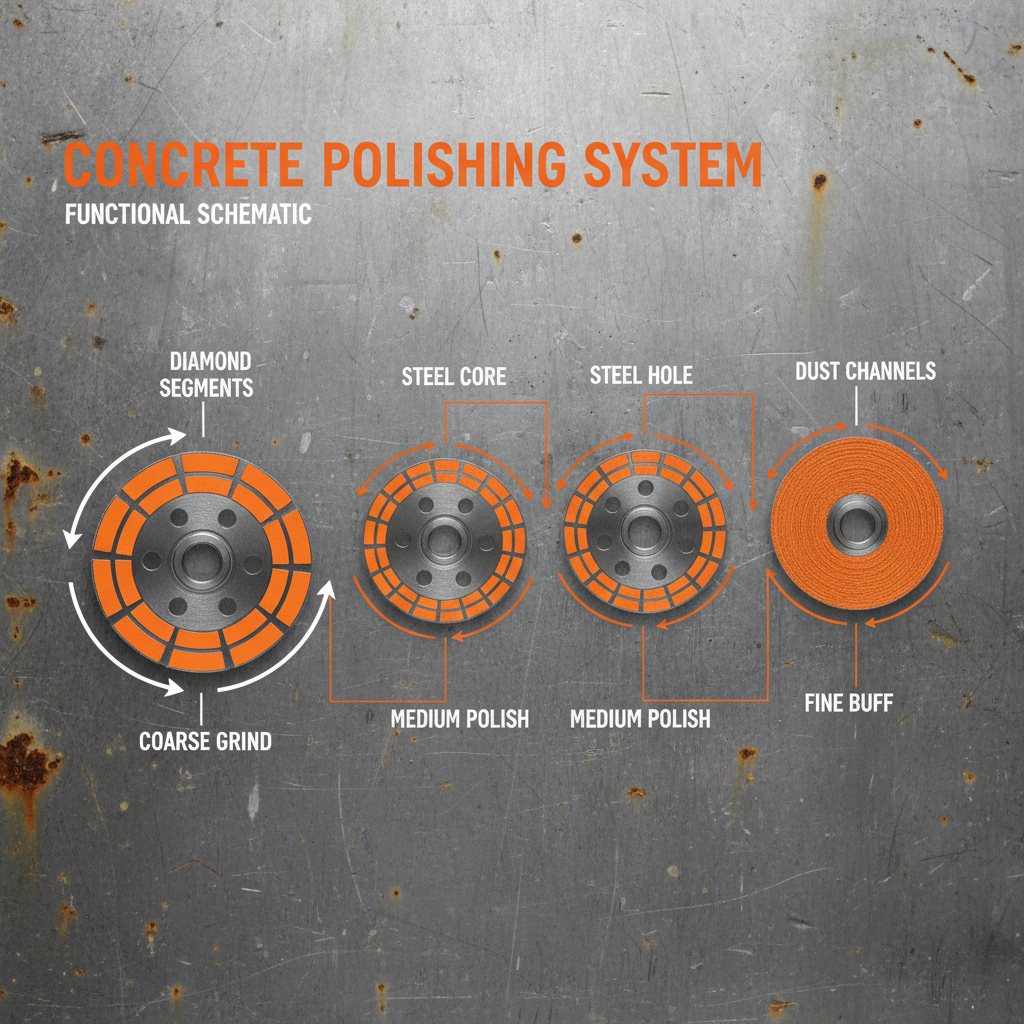
- Diameter: Ranging typically from 4 inches (100mm) to 7 inches (180mm), determining the grinding area and compatibility with different angle grinders or floor grinders.
- Arbor Size (Bore): The central hole diameter that fits onto the grinder spindle. Common sizes include 5/8"-11 (U.S. standard), M14 (European standard), and 7/8" (22.23mm).
- Grit Size: Refers to the coarseness of the diamond particles. Lower grit numbers (e.g., 16/20, 30/40) indicate larger, coarser diamonds for aggressive material removal and rough grinding. Higher grit numbers (e.g., 80/100, 120/150) indicate finer diamonds for smoother finishes and polishing preparation.
- Bond Hardness: The softness or hardness of the metal matrix holding the diamonds.
- Soft Bond: Releases diamonds more quickly, ideal for grinding hard, dense materials like hard concrete or granite, preventing glazing.
- Medium Bond: A versatile choice for a wide range of materials.
- Hard Bond: Retains diamonds longer, suitable for abrasive, softer materials like green concrete or asphalt, ensuring extended wheel life.
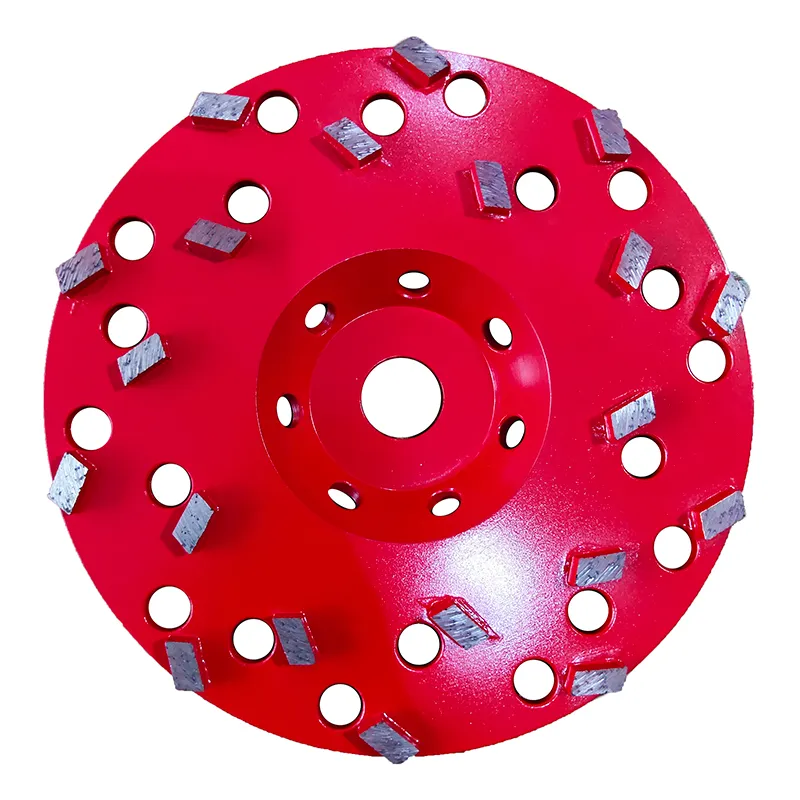
- Segment Configuration: The arrangement and shape of the diamond segments significantly impact performance.
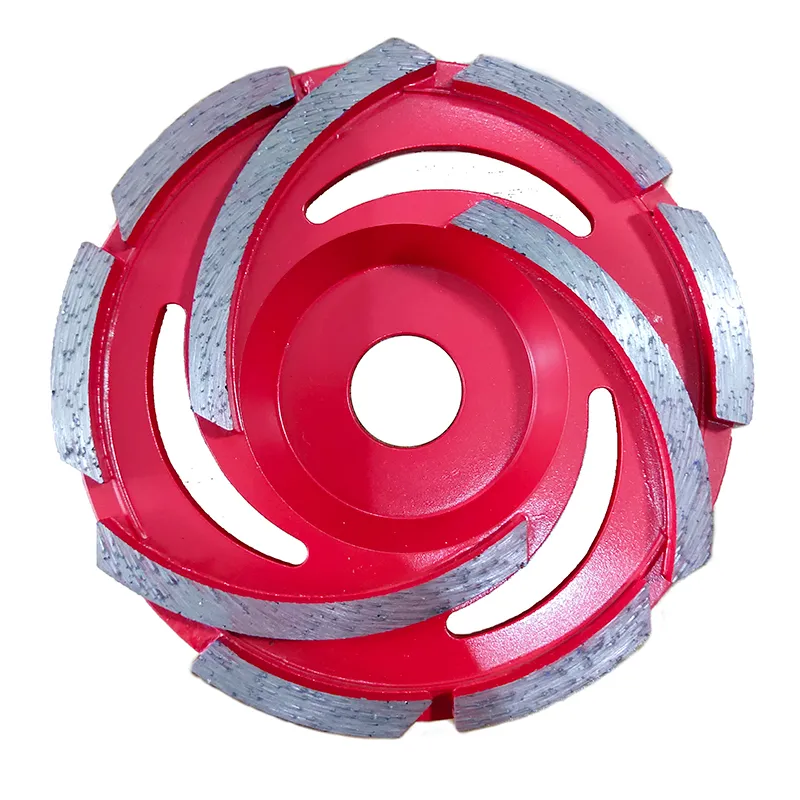
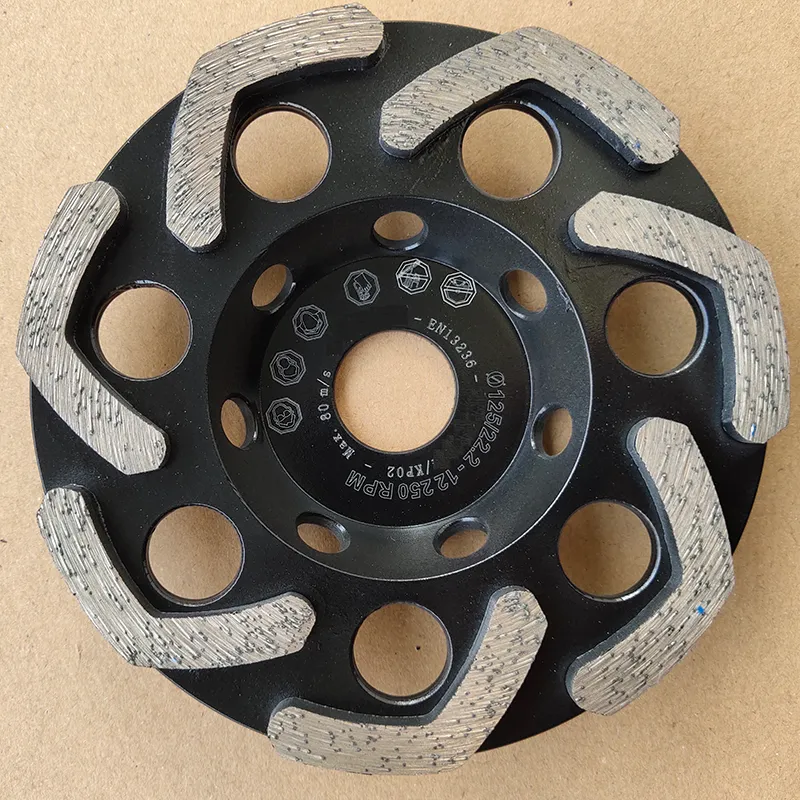
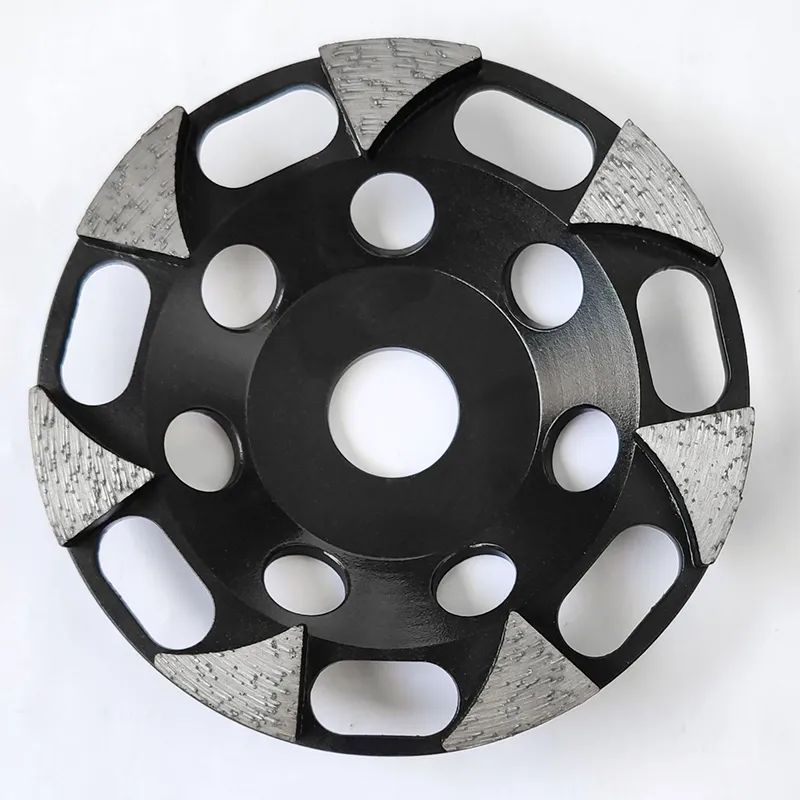
- Single Row Segments: Offer aggressive grinding and rapid material removal, often used for heavy-duty applications and surface leveling.
- Double Row Segments: Provide a more balanced grind, longer life, and a smoother finish than single-row, suitable for general grinding and coating removal.
- Turbo Segments: Feature continuous, angled segments for very fast, aggressive grinding and a relatively smooth finish, minimizing gouging. Excellent for general-purpose concrete grinding.
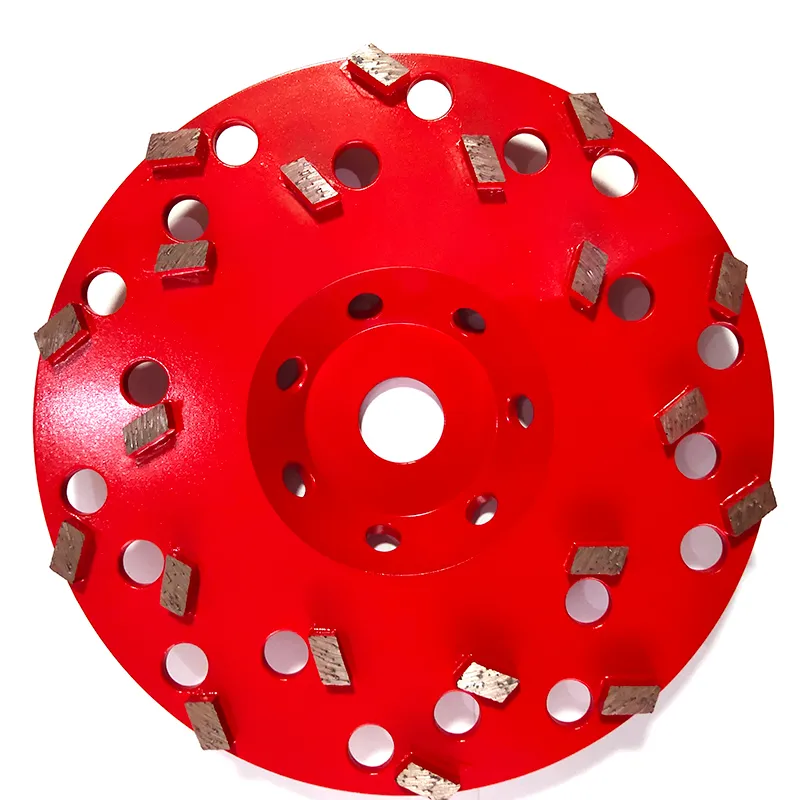
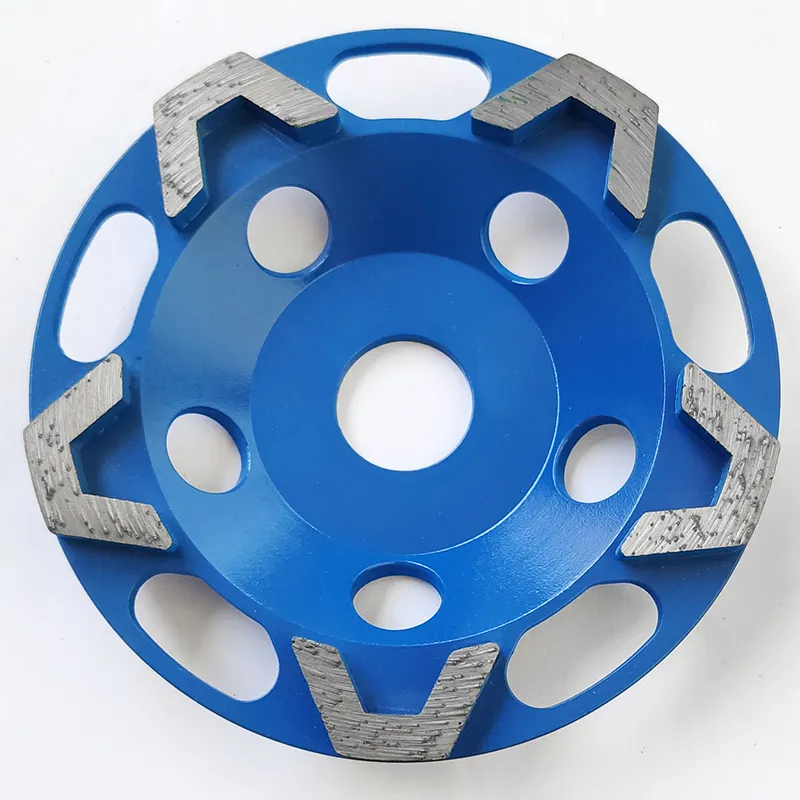
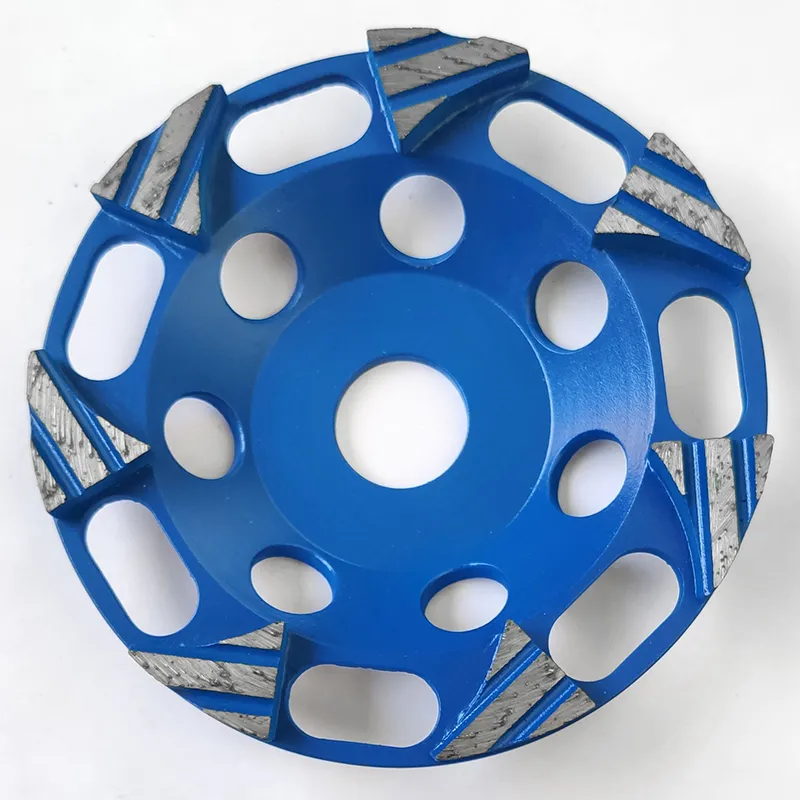
- Arrow/PCD Segments: Pointed or Polycrystalline Diamond (PCD) segments are specialized for removing thick coatings, glues, epoxies, and mastics, as they shear rather than grind.
- Maximum RPM (Revolutions Per Minute): The highest safe operating speed for the wheel, crucial for operator safety and preventing catastrophic failure. Always ensure the grinder's RPM does not exceed the wheel's maximum RPM rating.
- Dry/Wet Use: Some diamond cup wheels are designed for dry grinding, while others require water for cooling and dust suppression (wet grinding). Universal wheels can often be used for both.
Table 1: Common Diamond Cup Wheel Specifications and Applications
| Parameter | Common Ranges/Types | Typical Application | Key Performance Outcome |
|---|---|---|---|
| Diameter | 100mm (4"), 125mm (5"), 180mm (7") | Small area grinding, edge work, large surface grinding | Coverage area, machine compatibility |
| Arbor Size | 5/8"-11, M14, 22.23mm (7/8") | Universal fit for angle grinders/floor polishers | Tool compatibility |
| Grit Size | 30/40 (Coarse), 60/80 (Medium), 100/120 (Fine) | Heavy removal, general grinding, surface prep for coatings | Material removal rate, finish quality |
| Bond Hardness | Soft, Medium, Hard | Hard concrete, medium concrete, soft/abrasive concrete | Optimal lifespan & grinding efficiency for material type |
| Segment Config. | Single Row, Double Row, Turbo, PCD | Aggressive removal, general grinding, coating removal | Grinding aggression, finish smoothness, specialized function |
| Max RPM | 8,500 - 14,000 RPM (varies by diameter) | Ensuring safe operation with compatible grinders | Safety, prevention of wheel failure |
By carefully matching these parameters to the specific material being ground and the desired outcome, professionals can significantly enhance the efficiency and quality of their work, ensuring that each concrete grinding cup performs at its peak.
Diverse Applications and Industry Scenarios for Diamond Cup Wheels
The robust design and superior abrasive properties of diamond cup wheels make them indispensable tools across numerous industries. Their ability to aggressively grind and prepare diverse hard surfaces ensures optimal performance in applications ranging from construction and civil engineering to specialized material processing.
Key Application Scenarios:
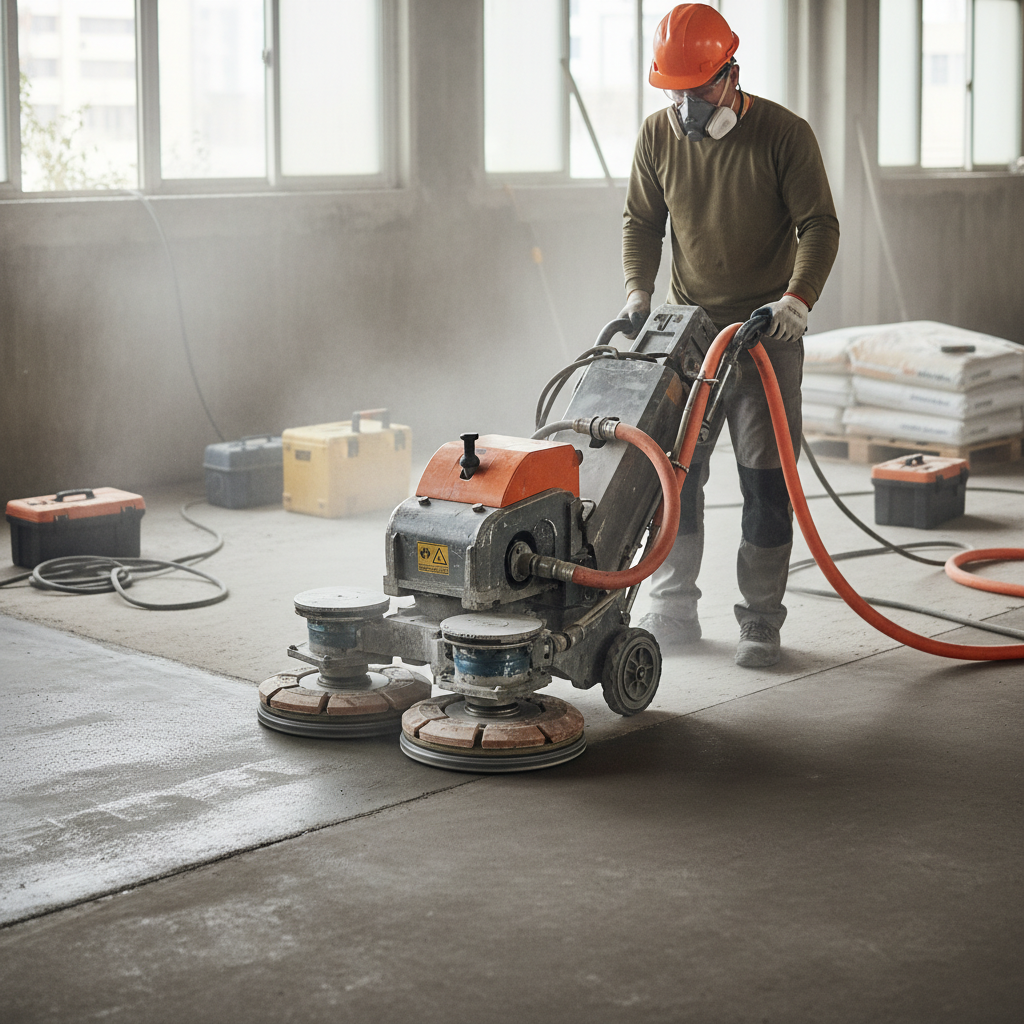
- Concrete Surface Preparation: This is arguably the most common application. Concrete grinding cups are used for leveling uneven concrete slabs, removing trowel marks, grinding down high spots, and preparing concrete surfaces for new coatings, sealers, or overlays. They are vital in warehouses, industrial plants, and commercial buildings for creating smooth, durable floors.
- Coating and Adhesive Removal: For renovation projects, these wheels effectively strip old coatings, paint, epoxy, thin-set, mastic, and residual adhesives from concrete or stone surfaces. Specialized PCD (Polycrystalline Diamond) segments are particularly effective for such tasks, shearing off materials without clogging.
- Stone Grinding and Shaping: In the stone fabrication industry, diamond cup wheels are used for shaping, beveling, and grinding natural stone materials like granite, marble, quartz, and engineered stone. They are essential for creating smooth edges, preparing surfaces for polishing, and repairing stone imperfections.
- Masonry and Brick Grinding: Ideal for smoothing rough edges of bricks, blocks, and other masonry materials, as well as for removing excess mortar. This ensures a clean finish and proper fit in construction and repair work.
- Terrazzo and Overlay Refinishing: Used for grinding down terrazzo, concrete overlays, and other decorative concrete surfaces to expose aggregates or prepare for high-gloss polishing. The choice of grit and bond is crucial to achieve the desired aesthetic.
- Road and Pavement Repair: Employed in smaller-scale road repair projects for grinding down humps, leveling uneven joints, or preparing surfaces for asphalt patching, ensuring a smooth and safe driving surface.
- Bridge Deck Preparation: Critical for preparing concrete bridge decks before applying waterproof membranes or overlays, ensuring optimal adhesion and long-term structural integrity.
In each scenario, the specific type of diamond cup grinding wheel—determined by its segment configuration, grit size, and bond hardness—is chosen to match the material’s characteristics and the project’s requirements, ensuring maximum efficiency and the desired finish.
Unleashing Performance: Technical Advantages of Diamond Cup Wheels
The adoption of diamond cup wheels over traditional abrasive methods is driven by a compelling set of technical advantages that translate directly into operational efficiencies, cost savings, and superior project outcomes. These benefits are particularly pronounced in demanding B2B environments where performance and reliability are non-negotiable.
Key Technical Advantages:
- Exceptional Material Removal Rate (MRR): Due to the extreme hardness of diamonds and optimized segment designs, diamond cup grinding wheels can remove material significantly faster than conventional abrasives. This translates into reduced labor hours and quicker project completion, boosting overall productivity.
- Superior Durability and Extended Lifespan: Diamonds are the hardest known material, ensuring that the abrasive properties of the wheel remain effective for an extended period. Compared to silicon carbide or aluminum oxide abrasives that wear down rapidly, a quality diamond cup offers a much longer service life, reducing the frequency of wheel changes and associated downtime.
- Consistent Performance and Finish Quality: The uniform distribution of diamonds within a robust metal bond ensures consistent grinding performance throughout the wheel's life. This leads to more predictable and higher-quality surface finishes, crucial for subsequent coating applications or aesthetic requirements.
- Versatility Across Hard Materials: From various strengths of concrete (green, cured, reinforced) to natural stones like granite, marble, and even brick, diamond cup wheels can effectively grind a wide range of hard, abrasive materials that would quickly dull or destroy other abrasive tools.
- Reduced Heat Buildup: Many diamond cup wheels are designed with cooling holes or segmented patterns that facilitate airflow, reducing heat buildup during dry grinding. This minimizes material stress and extends tool life. For wet grinding applications, water acts as a lubricant and coolant, further enhancing efficiency and finish quality.
- Enhanced Safety and Vibration Control: Properly manufactured and balanced diamond cup grinding wheels operate with minimal vibration, reducing operator fatigue and increasing safety. When paired with appropriate dust shrouds, they significantly reduce airborne dust, improving air quality on the job site and complying with health and safety regulations (e.g., OSHA's crystalline silica dust regulations).
- Cost-Effectiveness in the Long Run: While the initial investment in a diamond cup wheel might be higher than traditional abrasives, its extended lifespan, faster grinding speed, and consistent performance lead to lower overall operational costs. Fewer replacements, less downtime, and superior results contribute to a significantly improved return on investment (ROI).
Manufacturer Comparison and Selection Criteria for Diamond Cup Wheels
Navigating the market for diamond cup wheels requires a discerning eye, especially for B2B buyers who prioritize reliability, performance, and long-term value. While many manufacturers offer these products, their quality, consistency, and support can vary significantly. Understanding key selection criteria and considering a comparison of offerings is crucial.
Key Factors in Manufacturer Selection:
- Manufacturing Expertise and Technology: Look for manufacturers with a deep understanding of metallurgy, diamond technology, and advanced manufacturing processes (e.g., precise sintering, laser welding). This indicates their ability to produce consistently high-quality diamond cup grinding wheels.
- Quality Control and Certifications: Verify if the manufacturer adheres to international quality management standards like ISO 9001. Certifications, combined with rigorous in-house testing (e.g., segment pull-out strength, balance testing, real-world performance tests), signify a commitment to product excellence and safety.
- Material Sourcing: Reputable manufacturers source high-grade industrial diamonds and pure metal powders, which directly impact the grinding efficiency and lifespan of the diamond cup.
- Product Range and Customization: A broad product line covering various segment configurations, grit sizes, and bond types (soft, medium, hard) demonstrates versatility. The ability to offer custom solutions for unique project requirements is also a significant advantage.
- Technical Support and After-Sales Service: Access to knowledgeable technical support for product selection, troubleshooting, and application advice is invaluable. A strong warranty and responsive customer service indicate a manufacturer's confidence in their product and commitment to client satisfaction.
- Reputation and Industry Experience: A manufacturer with a long track record and positive industry reputation often reflects consistent product quality and reliable business practices. Look for testimonials, case studies, and industry partnerships.
Table 2: Comparison of Diamond Cup Wheel Types/Brands (Illustrative)
| Feature/Criteria | Standard Turbo Cup Wheel | Premium Double Row Cup Wheel | Specialized PCD Cup Wheel |
|---|---|---|---|
| Primary Use | General concrete grinding, fast material removal | General concrete grinding, coating prep, longer life | Aggressive coating, glue, mastic removal |
| Grinding Speed | Very High | High | Extremely High (for coatings) |
| Finish Quality | Good (minimal gouging) | Very Good (smoother) | Rough (designed for removal, not finish) |
| Lifespan | Medium to Long | Longest among general-purpose | Variable, excels on soft coatings, not for bare concrete |
| Cost (Relative) | $$ | $$$ | $$$$ (specialized) |
| Recommended Use | General concrete removal, leveling | Heavy-duty grinding, floor preparation | Epoxy, paint, glue, mastic removal |
By meticulously evaluating these factors, businesses can forge partnerships with manufacturers who not only supply high-quality concrete grinding cups but also provide the expertise and support necessary for long-term success.
Custom Solutions and Advanced Engineering for Specific Project Needs
While standard diamond cup wheels cover a broad spectrum of applications, some projects present unique challenges that demand tailored solutions. Leading manufacturers recognize this need and offer custom engineering services to design and produce specialized diamond cup grinding wheels that precisely meet stringent performance criteria for highly specific materials or grinding tasks.
The Value of Custom Solutions:
- Optimized Performance for Unique Materials: For highly abrasive or extremely dense materials, a standard bond and grit size may not provide optimal results. Custom solutions allow for precise formulation of metal bonds and selection of diamond types/concentrations, ensuring maximum efficiency and tool life.
- Addressing Specific Grinding Challenges: Projects involving unusual surface contaminants, very uneven substrates, or specific finish requirements (e.g., ultra-fine polishing prep, aggressive stock removal without gouging) can benefit from a custom concrete grinding cup design.
- Non-Standard Equipment Compatibility: While common arbor sizes exist, some specialized grinding machines may require unique bore diameters or mounting configurations. Custom manufacturing ensures perfect compatibility, eliminating the need for adapters and improving safety.
- Enhanced Efficiency and Cost Savings: A precisely engineered custom wheel, though potentially having a higher initial cost, can dramatically reduce grinding time, extend tool life, and improve overall project profitability by avoiding costly rework or inefficient operations with mismatched tools.
- Prototyping and Testing: Reputable providers of custom diamond cup solutions typically engage in a collaborative process involving detailed consultations, design iterations, prototyping, and rigorous testing. This ensures the final product meets all specifications before full-scale production.
This bespoke approach to diamond cup wheels demonstrates a manufacturer's commitment to solving complex client problems and solidifies their position as an expert and authoritative partner in the industry.
Real-World Impact: Case Studies and Client Success Stories
The true measure of a diamond cup wheel's effectiveness lies in its performance in real-world scenarios. Our commitment to delivering high-performance tools is underscored by numerous successful applications and positive client feedback, showcasing the tangible benefits our products provide across diverse industrial settings.
Case Study 1: Large-Scale Industrial Floor Restoration
A major logistics hub required the complete restoration of a 50,000 sq ft concrete floor, which was heavily contaminated with old epoxy coatings, oil stains, and uneven sections. Traditional methods proved too slow and costly. Our team recommended a combination of 7-inch turbo-segment diamond cup wheels (30/40 grit) for initial aggressive removal and 7-inch double-row wheels (60/80 grit) for subsequent smoothing. The client reported a 35% reduction in grinding time compared to their previous experience with competitor products, attributing this to the superior material removal rate and extended lifespan of our diamond cup grinding wheels. The floor was prepared within budget and ahead of schedule for a new high-performance coating.
Case Study 2: Precision Concrete Leveling for a New Retail Space
A prominent retail chain was building a new flagship store, where the concrete subfloor needed to be leveled to within a +/- 1/16 inch tolerance for precise tile installation. Using standard single-row diamond cup wheels, the contractors struggled with maintaining an even plane. We introduced our specially balanced 5-inch premium turbo diamond cup, designed for reduced vibration and a flatter cut. The project manager noted, "The precision and consistent cut quality from these diamond cup wheels were outstanding. We achieved the required flatness faster and with far less rework, saving us significant labor costs."
Client Testimonial:
"We've been using these diamond cup wheels for our concrete polishing projects for over five years. The consistency in quality and the extended life we get from each wheel are unmatched. Their technical support team is also incredibly responsive, helping us choose the perfect bond for every unique concrete slab we encounter. Truly a reliable partner."
These examples illustrate the tangible value and competitive edge our high-quality diamond cup wheels bring to complex industrial projects, reinforcing our commitment to excellence and client satisfaction.
Quality Assurance, Delivery, and Unwavering Customer Support
Our commitment extends beyond merely manufacturing high-quality diamond cup wheels. We understand that for B2B clients, reliability, timely delivery, and comprehensive support are just as critical as product performance. Our operational framework is designed to instill complete trust and confidence in every interaction.
Rigorous Quality Assurance:
Every diamond cup wheel leaving our facility undergoes a multi-stage quality control process. This includes:
- Raw Material Inspection: Verifying the purity and specifications of industrial diamonds and metal powders upon arrival.
- In-Process Checks: Monitoring critical parameters during sintering, brazing, and balancing to ensure consistency.
- Final Product Testing: Comprehensive tests for segment pull-out strength, body integrity, dimensional accuracy, and dynamic balancing. Selected batches are also subjected to real-world grinding tests on various materials to confirm performance.
- Adherence to Standards: Our manufacturing processes are compliant with ISO 9001 quality management systems, ensuring a systematic approach to quality at every step.
Efficient Global Delivery and Supply Chain:
We recognize the importance of timely availability. Our robust supply chain and logistics network are optimized to ensure efficient order processing and delivery of diamond cup wheels to clients worldwide. We work with trusted shipping partners to minimize transit times and provide transparent tracking, keeping you informed from dispatch to arrival. For large or recurring orders, we can establish customized delivery schedules and inventory management solutions to integrate seamlessly with your operational needs, ensuring you always have the right diamond cup when you need it.
Comprehensive Customer Support and Warranty:
Our relationship with clients extends far beyond the point of sale. We offer dedicated customer support, including:
- Expert Technical Assistance: Our team of experienced technical professionals is available to provide guidance on product selection, application best practices, troubleshooting, and optimization strategies for your concrete grinding cup.
- Responsive Communication: We pride ourselves on prompt and clear communication, addressing inquiries and concerns efficiently.
- Warranty Assurance: All our diamond cup wheels are backed by a comprehensive warranty, affirming our confidence in their quality and durability. Details of our warranty policy are transparently provided, offering peace of mind.
- Feedback Integration: We actively solicit client feedback to continuously improve our products and services, fostering long-term partnerships built on mutual trust and success.
Frequently Asked Questions (FAQ) about Diamond Cup Wheels
Q1: What is the primary difference between a single-row and double-row diamond cup wheel?
A1: Single-row diamond cup wheels typically offer more aggressive grinding and faster material removal due to fewer, larger segments applying higher pressure per diamond. Double-row wheels provide a smoother finish, longer lifespan, and more balanced grinding action due to a larger contact area and increased diamond count.
Q2: How do I choose the correct grit size for my concrete grinding cup?
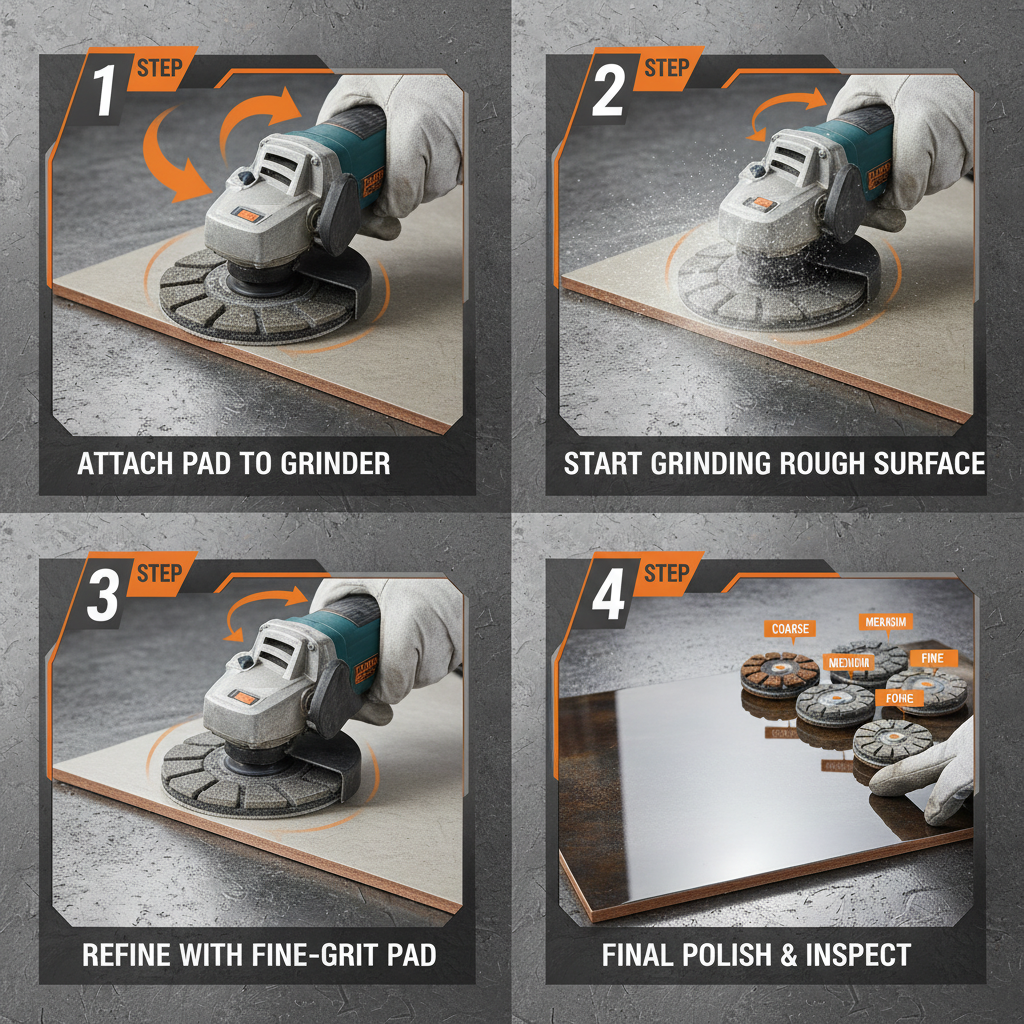
A2: The choice depends on the desired outcome and the material. Coarser grits (e.g., 16/20, 30/40) are for aggressive material removal, leveling, and initial surface preparation. Finer grits (e.g., 80/100, 120/150) are used for smoother finishes, preparing for polishing, or lighter grinding tasks. Always start with a coarser grit for heavy removal and progressively move to finer grits for polishing.
Q3: What does bond hardness mean for diamond cup wheels, and why is it important?
A3: Bond hardness refers to the strength of the metal matrix holding the diamonds. A softer bond is ideal for hard, dense materials (like hard concrete) because it wears away faster, continuously exposing fresh, sharp diamonds, preventing glazing. A harder bond is better for softer, more abrasive materials (like green concrete or asphalt) as it retains the diamonds longer, maximizing wheel life.
Q4: Can diamond cup wheels be used for both wet and dry grinding?
A4: Some diamond cup wheels are designed specifically for dry grinding, others for wet grinding, and some are versatile for both. Always check the manufacturer's specifications. Wet grinding offers superior cooling, dust suppression, and often a better finish, while dry grinding offers convenience and quicker cleanup (when paired with a dust shroud and vacuum).
Q5: What safety precautions should be taken when using diamond cup grinding wheels?
A5: Always wear appropriate Personal Protective Equipment (PPE), including eye protection, hearing protection, gloves, and a dust mask/respirator. Ensure the grinder's RPM does not exceed the wheel's maximum RPM rating. Use a dust shroud and industrial vacuum for dust control. Secure the workpiece, and never force the wheel. Inspect the wheel for damage before each use.
Conclusion: The Future of Surface Preparation with Diamond Cup Wheels
As construction and renovation industries continue to evolve, the demand for more efficient, durable, and precise grinding solutions will only intensify. Diamond cup wheels, particularly the specialized concrete grinding cup, represent the pinnacle of abrasive technology, offering unmatched performance for challenging surface preparation tasks. Their technical superiority, versatility across materials, and significant long-term cost benefits position them as indispensable tools for any professional aiming for excellence.
By understanding the intricate manufacturing processes, key technical parameters, and diverse application scenarios, B2B decision-makers can confidently select the optimal diamond cup grinding wheels for their specific needs. Partnering with a manufacturer that prioritizes quality, offers robust support, and provides tailored solutions ensures not only superior grinding results but also operational efficiency and enhanced safety on every project. Investing in high-quality diamond cup wheels is an investment in productivity, longevity, and overall project success.
References
- American National Standards Institute (ANSI) B7.1, Safety Requirements for the Use, Care, and Protection of Abrasive Wheels.
- International Organization for Standardization (ISO) 9001, Quality management systems – Requirements.
- Occupational Safety and Health Administration (OSHA) 29 CFR 1926.1153, Respirable Crystalline Silica Standard for Construction.
- Fundamentals of Abrasive Technology, Society of Manufacturing Engineers.
- Diamond Tool Production: Manufacturing and Application, by J. Wang & L. Xu.
Related Products
Related Products




Address
No.30 Gaoying Road ,Chang'an District,Shijiazhuang,Hebei Province
Business Hours
Mon to Saturday : 8.00 am - 7.00 pm
Sunday & Holidays : Closed
.png )